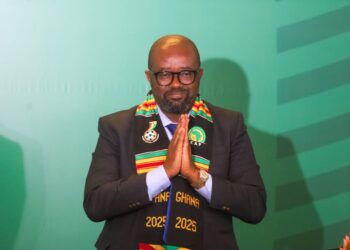


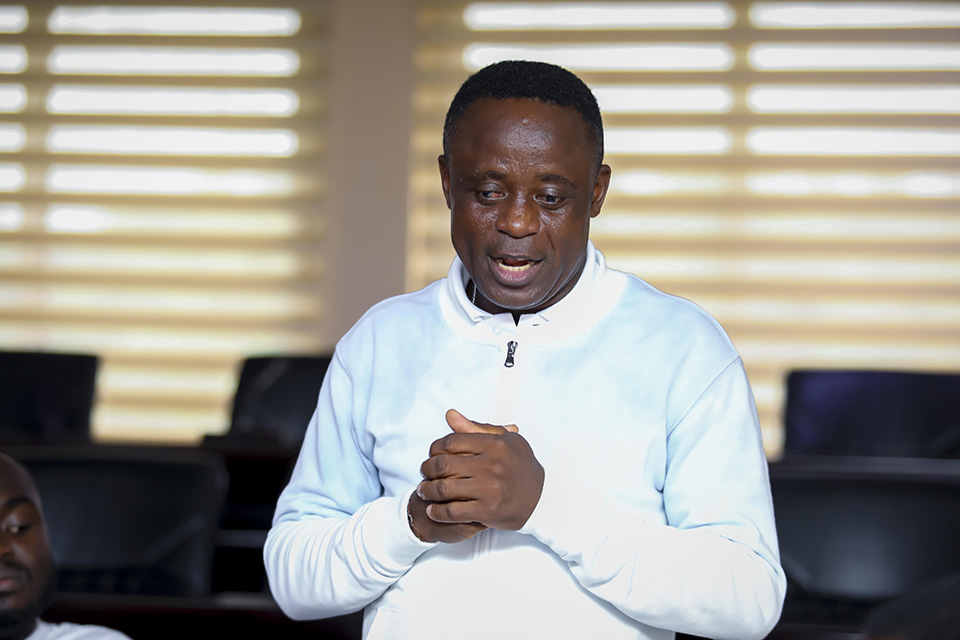
An open letter to the president of the Ghana Football Association
Dear Mr. President,
I write this open letter not as an adversary of the Ghana Football Association (GFA), but as a concerned stakeholder who has devoted a substantial part of his professional life to football development, coaching education, sports science and the training of future generations of football coaches.
I write as a former football player, a certified football coach, an Associate Professor of Sports and Exercise Science, and a university lecturer who has taught football for more than two decades.
I recently took particular interest in your assertion that competent coaches, effective grassroots talent identification and development, and adequate funding constitute the fundamental pillars of a successful football development programme.
Mr. President, I could not agree with you more. These are cogent, scientifically defensible and internationally recognised principles of football development.
However, my concern is not about the validity of these principles. My concern is whether the structures, institutions, policies and professional systems necessary to translate these principles into sustainable football development actually exist and function effectively in Ghana.
1. What Has Become of the Ghana Football Coaches Association?
Mr. President, one fundamental question continues to trouble me:
What is the current status, relevance and institutional recognition of the Ghana Football Coaches Association?
How influential is the Association in the formulation of coaching policies, professional development programmes, coaching standards and the protection of the professional interests of Ghanaian coaches?
Does the GFA consider the Association a strategic partner in football development, or has it become a peripheral organisation whose relevance is recognised only when convenient?
A nation that professes to value competent coaches cannot afford to neglect the professional body representing those coaches.
Football coaches are not merely technical personnel employed to win matches. They are educators, mentors, talent developers, performance specialists and important custodians of the football development system.
If coaches are central to football development, then their professional association must equally be central to football governance and policy formulation.
2. Who Is Responsible for Football Coaching Education in Ghana?
Mr. President, this question deserves serious national attention.
Who is ultimately responsible for the scientific, technical and professional education of football coaches in Ghana?
What is the relationship between the GFA’s technical structures, coaching education providers, universities, sports science institutions and the Ghana Football Coaches Association?
More importantly, what nationally coordinated curriculum are we using to produce coaches capable of meeting the scientific, technological, tactical and physiological demands of contemporary football?
Modern football coaching education must go beyond tactical formations, technical drills and conventional training sessions.
It must incorporate exercise physiology, biomechanics, sports psychology, performance analysis, periodisation, sports nutrition, strength and conditioning, injury prevention, rehabilitation principles, talent identification, growth and maturation, and evidence-based athlete development.
We must ask whether our coaching education structures are sufficiently integrating these critical scientific disciplines.
A football nation cannot consistently aspire to international excellence while treating the scientific preparation of its coaches as an afterthought.
3. Our Universities Have Produced Coaches, but Are We Utilising Their Potential?
Mr. President, for more than twenty years, I have had the privilege of teaching football at the university level.
During this period, I have contributed to the academic and professional development of numerous individuals who have gone on to become recognised personalities within Ghanaian football.
Among them are Mercy Tagoe, Didi Dramani, Edna Yeke, Anokye Frempong, Stephen Gurah and Bernice Adutwumwaa, to mention only a few.
These individuals represent the enormous potential of structured football education and the contribution universities can make to the development of the game.
Yet I continue to ask myself: What deliberate national framework exists to harness the expertise of university-based football educators, sports scientists, researchers and coaching professionals?
Why should our universities produce knowledgeable graduates and coaches while the national football development architecture fails to fully integrate the scientific expertise available within these institutions?
The relationship between football governing bodies and universities must extend beyond occasional invitations to workshops and seminars.
It must become a structured, institutionalised partnership for coaching education, applied research, curriculum development and professional certification.
4. The Persistent Dependence on Foreign Fitness Coaches
Mr. President, this is perhaps one of my greatest frustrations.
Year after year, we engage foreign fitness coaches and physical preparation specialists, sometimes at considerable monthly financial cost.
Let me be clear: I have absolutely nothing against foreign expertise.
Indeed, international collaboration and knowledge exchange are indispensable to modern sports development.
However, what I find difficult to understand is why we continue to invest substantial resources in foreign specialists without an equally deliberate commitment to developing Ghanaian football-specific strength and conditioning coaches.
Why are we not establishing structured programmes through which these foreign specialists transfer knowledge, mentor local professionals and contribute to the certification of Ghanaian coaches?
Why should the engagement of a foreign fitness coach end primarily with the preparation of a national team when that same engagement could become an opportunity to build national technical capacity?
Imagine the long-term benefits if every foreign strength and conditioning specialist engaged by our national teams were required to mentor and train a designated number of Ghanaian coaches.
Within a few years, Ghana could develop a substantial pool of competent football-specific strength and conditioning professionals capable of serving national teams, professional clubs, academies and grassroots football programmes.
The real value of foreign technical expertise should not be measured only by immediate performance outcomes, but also by the knowledge, skills and institutional capacity transferred to Ghanaian professionals.
5. The Painful Irony: Academics Are Involved in Coaching Education
Mr. President, what makes this situation particularly disappointing is that some of those involved in coaching education are themselves academics.
One would naturally expect academic leadership to champion scientific innovation, curriculum development, professional research, evidence-based practice and the continuous advancement of coaching knowledge.
Yet the question remains: Where is the comprehensive national strategy for developing football-specific sports scientists, strength and conditioning coaches, performance analysts and other technical specialists?
Where are the structured pathways linking academic qualifications, professional coaching certification, practical competence and continuing professional development?
Academic involvement in coaching education must translate into measurable institutional outcomes.
It is not enough to organise periodic certification courses if the broader system is not producing the range and depth of expertise required by modern football.
Our coaching education framework must deliberately prepare professionals for the changing demands of the game.
6. My Appeal to You, Mr. President
I respectfully call on you to take a personal and sustained interest in strengthening the Ghana Football Coaches Association and reforming the national coaching education system.
Specifically, I propose that the GFA:
1. Engage the Ghana Football Coaches Association to examine its current challenges, institutional relevance, professional development needs and role in national football policy.
2. Commission a comprehensive review of football coaching education in Ghana, including the curriculum, certification pathways, delivery systems, scientific content and professional competencies expected of coaches.
3. Establish formal partnerships with universities and recognised sports science institutions to strengthen coaching education, applied research and technical capacity development.
4. Develop a national football-specific strength and conditioning education programme, with clear professional standards, certification pathways and continuing education opportunities.
5. Introduce structured knowledge-transfer obligations into the engagement arrangements of foreign technical specialists, where appropriate, to ensure that Ghanaian coaches benefit from their expertise.
6. Create a national coaching development framework that connects grassroots football, schools, academies, professional clubs and national teams through a coherent philosophy of player and coach development.
7. Provide meaningful representation for coaching professionals in relevant technical policy discussions and decisions affecting coaching education and football development.
7. Ghanaian Football Needs Strong Institutions, Not Just Strong Personalities
Mr. President, football development cannot depend indefinitely on the competence of a few individuals, the availability of foreign experts or the occasional success of our national teams.
Sustainable football development requires strong institutions, qualified professionals, coherent curricula, continuous research and a deliberate succession system.
We must build a football culture in which knowledge is developed, shared, institutionalised and passed from one generation of coaches to another.
We cannot continue to complain about the declining standards of football while paying insufficient attention to the professional preparation of the very people entrusted with developing footballers.
The quality of our footballers will, to a considerable extent, reflect the quality of the coaches who discover, nurture, train and develop them.
And the quality of those coaches will depend on the effectiveness of the institutions responsible for their education and professional development.
Conclusion: Mr. President, Please Pay Attention to the Coaches
Mr. President, I believe your identification of competent coaches as a fundamental pillar of football development provides an important opportunity for institutional reform.
However, this commitment must go beyond public declarations.
It must be reflected in investment priorities, coaching curricula, professional recognition, scientific capacity development and the strengthening of the Ghana Football Coaches Association.
A football system that neglects the development and professional organisation of its coaches is gradually undermining its own future.
I therefore respectfully urge you to take a critical interest in the Ghana Football Coaches Association and the broader coaching education system.
The weaknesses in these structures may well be among the important contributors to the challenges confronting Ghanaian football today.
We cannot build world-class footballers with an underdeveloped coaching education system. We cannot achieve sustainable football excellence by continuously importing expertise without deliberately developing our own. And we cannot claim that coaches are central to football development while leaving their professional institutions on the margins.
Mr. President, the time to act is now. Ghanaian football deserves better. Our coaches deserve better. And the next generation of Ghanaian footballers deserves a scientifically grounded, professionally coordinated and sustainable football development system.
I write out of genuine concern, professional responsibility and an enduring commitment to the development of Ghanaian football. Yours in the service of Ghanaian football,
Emmanuel Osei Sarpong, PhD
Associate Professor of Sports and Exercise Science
Certified Football Coach
University Football Lecturer
Former Football Player
University of Education, Winneba, Ghana