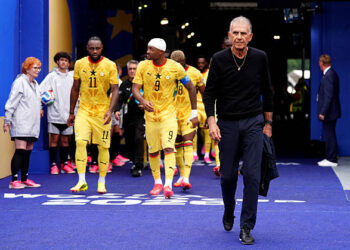



The 2026 FIFA World Cup runs from June 11 to July 19 across the United States, Canada, and Mexico the largest edition of the tournament in history. And Ghana will be there. The Black Stars are among nine African nations that secured direct qualification, joining continental heavyweights Egypt, Senegal, Morocco, and Tunisia. After years of prayers and replays of 2010, they are going back.
But qualifying is only half the battle. The other half is showing up.
Ghana have been drawn in Group L and face Panama in Toronto on June 17, England in Boston on June 23, and Croatia in Philadelphia on June 27. Three games. Three cities. Three chances to fill those stands with red, gold, and green. Every Ghanaian who has ever crowded around a television set in a chop bar on match night knows what it would mean to be there to scream “Oseey yie!” in the middle of Boston, to make the Black Stars feel that they are not alone.
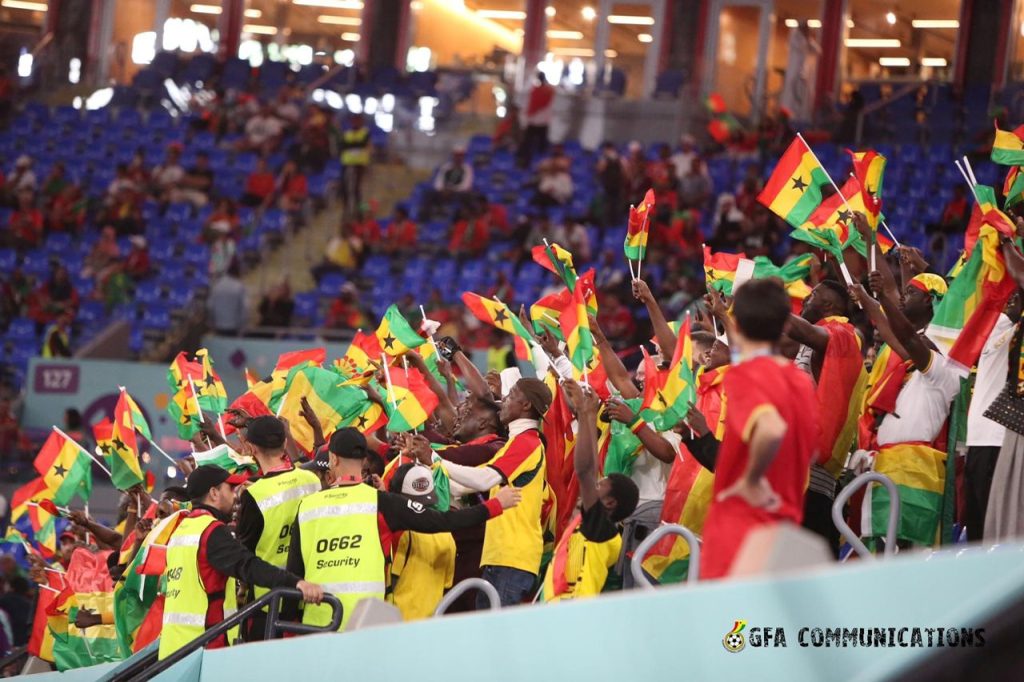
That feeling does not come cheap. A return flight from Accra to America currently sits between $900 and $1,500. Add accommodation, match tickets, feeding, and local transport across three cities, and a single supporter is looking at $3,000 to $5,000 for the full group stage. For the market woman in Kejetia, the teacher in Tamale, the electrician in La, that figure is almost unimaginable.
This is precisely why fundraising is not a luxury idea. It is a necessity and the government has already made that position official.
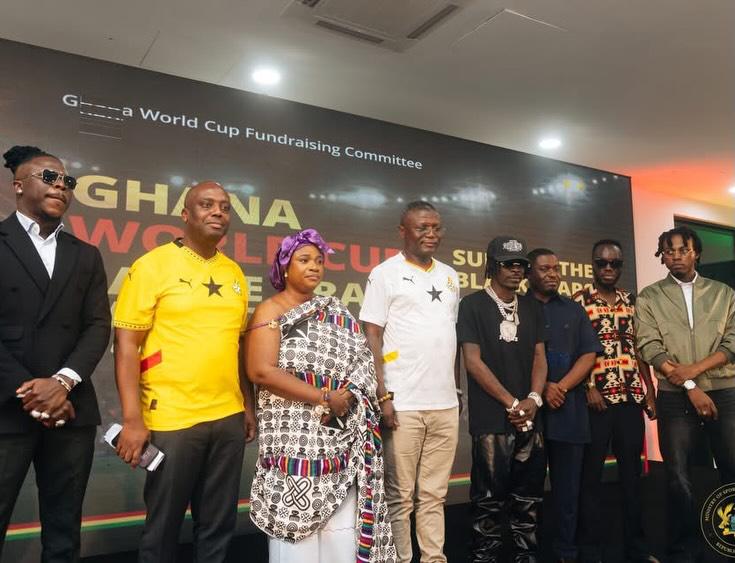
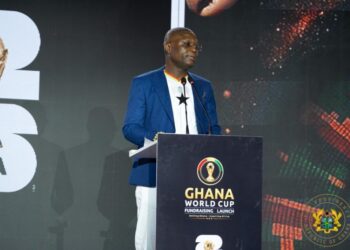
President John Dramani Mahama officially launched Ghana’s fundraising campaign at the Kempinski Hotel Gold Coast City in Accra, bringing together leading figures from sports, entertainment and business, including former Black Stars captain Stephen Appiah, Fatawu Dauda, Mohammed Polo, Stonebwoy, Shatta Wale, and NACEE. The Ghana World Cup Committee has set a target of $30 million to fund the team’s full participation, including four international friendly matches. However, President Mahama was emphatic that state funds will not be used to fly supporters to the tournament, citing the Dzamefe Commission Report, and noting that transporting and accommodating just 200 supporters would cost close to $2 million. The message was clear: the government will back the team, but sending fans to America is a collective responsibility.
Corporate Ghana and the entertainment world have already answered that call loudly. Engineers and Planners, owned by Ibrahim Mahama, committed $5 million as the headline sponsor of the campaign, while Gold Fields Ghana pledged $2 million immediately with an additional $1 million planned for next year. Shatta Wale donated $100,000, while Stonebwoy pledged $101,000 made up of $81,000 in cash and $20,000 in music production services. In total, the campaign has already raised $12,096,000 in addition to GHS 13,950,000 and a GHS 20,000,000 insurance package. Any surplus generated, Deputy Finance Minister Thomas Nyarko Ampem confirmed, will be channelled into the Ghana Sports Fund, with all contributions carefully managed through dedicated Bank of Ghana accounts.
🎥 🇬🇭 “The fundraising target for the World Cup is $30 million dollars and on the first day of the launch we have got $10 million dollars.”—Hon. Thomas Nyarko Ampem, Deputy Minister for Finance and chairman of the Fundraising Committee.#CitiSports pic.twitter.com/dstzbOkCiL
— Citi Sports (@CitiSportsGHA) March 21, 2026
If Ghana’s boardrooms and entertainment industry can show up like that, there is no reason ordinary Ghanaians in their churches, workplaces, and market associations cannot match that energy at their own level. The logic is simple: what one person cannot afford alone, fifty people can afford together. A community of fifty people contributing GHS 500 each generates GHS 25,000 enough to send two or three fans as official ambassadors, with matching jerseys and a mandate to make noise for everyone who could not go.
The Ghanaian diaspora in America and Canada in New York, Houston, Washington DC, Toronto, and Calgary has a particularly important role to play. They do not need a flight from Accra. They need organization. Fan clubs can run benefit nights, merchandise drives, and Ghana fan zones at sports bars, directing proceeds to a supporter travel fund while bulking up their own matchday numbers.
Back home, susu groups can be repurposed for World Cup travel. Custom Black Stars merchandise can be sold at a premium. A World Cup raffle draw has also been unveiled as a key revenue stream, giving every Ghanaian a direct and accessible way to participate.
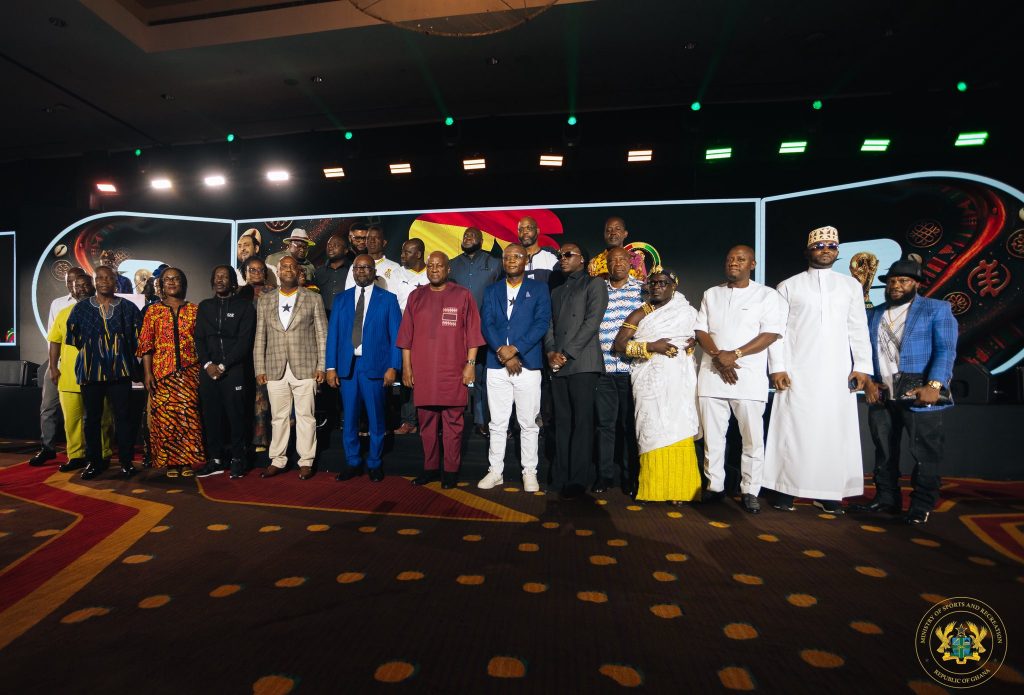
The squad Otto Addo is taking to North America deserves this level of mobilization. Antoine Semenyo, Mohammed Kudus, Thomas Partey, Jordan Ayew, Inaki Williams, and Kamaldeen Sulemana form the spine of one of the most exciting Black Stars generations in years. They will play in front of billions globally. The least their countrymen can do is find a way to be in those seats.
Ghana’s footballing history gives every supporter reason to believe this tournament can be special. The 2010 quarter-final run in South Africa when Asamoah Gyan’s penalty hit the crossbar and broke a million hearts, remains the closest the nation has come to a World Cup semi-final. Ghana will be hoping to surpass that. But making history requires more than eleven players on a pitch. It requires a nation behind them.
The Black Stars qualified. Now it is time for the supporters to qualify too.