
• About Us
  • Privacy Policy
Thursday, September 17, 2026
Citi Sports Online
  • Home
  • News
  • Football
    • Premier League
    • Local Football
  • Ghana Premier League
  • Livescores
  • Sports Panorama
  • Videos
  • World Cup
  • AFCON
No Result
View All Result
  • Home
  • News
  • Football
    • Premier League
    • Local Football
  • Ghana Premier League
  • Livescores
  • Sports Panorama
  • Videos
  • World Cup
  • AFCON
No Result
View All Result
Citi Sports Online
No Result
View All Result

Ghana’s decline in youth football development deepens Black Stars quota debate

Naa Kwaamah Siaw-Marfo by Naa Kwaamah Siaw-Marfo
April 28, 2026
Reading Time: 4 mins read
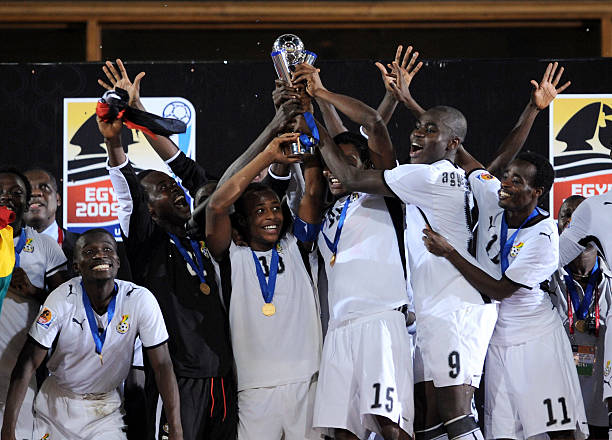
Ghana captain Andre Ayew holds up the trophy with team-mates during the FIFA U20 World Final match between Ghana and Brazil at the Cairo International Stadium  on October 16, 2009 in Cairo, Egypt. Photo by Shaun Botterill -FIFA/FIFA via Getty Images

Ghana captain Andre Ayew holds up the trophy with team-mates during the FIFA U20 World Final match between Ghana and Brazil at the Cairo International Stadium on October 16, 2009 in Cairo, Egypt. Photo by Shaun Botterill -FIFA/FIFA via Getty Images

A renewed debate over whether locally based players deserve a quota in the Black Stars has brought an old issue back into focus, Ghana’s gradual decline in youth football development and its impact on the senior national team.

For years, Ghana’s football success was built on a clear development structure, strong U-17, U-20 and U-23 teams feeding talent into the Black Stars.

That system produced some of the country’s finest players, including Ishmael Addo, Michael Essien, Sulley Muntari, Asamoah Gyan, and Stephen Appiah, who rose through the youth ranks to anchor the senior team’s “golden generation.”

That model was evident as far back as the early 2000s. Around 1999 to 2000, Ghana’s U-17 team, the Black Starlets, stood out as a dominant force, finishing third at the 1999 FIFA U-17 World Championship and winning the 1999 African U-17 Championship. The squad featured standout talents such as Ishmael Addo, who emerged as the tournament’s top scorer in 1999.
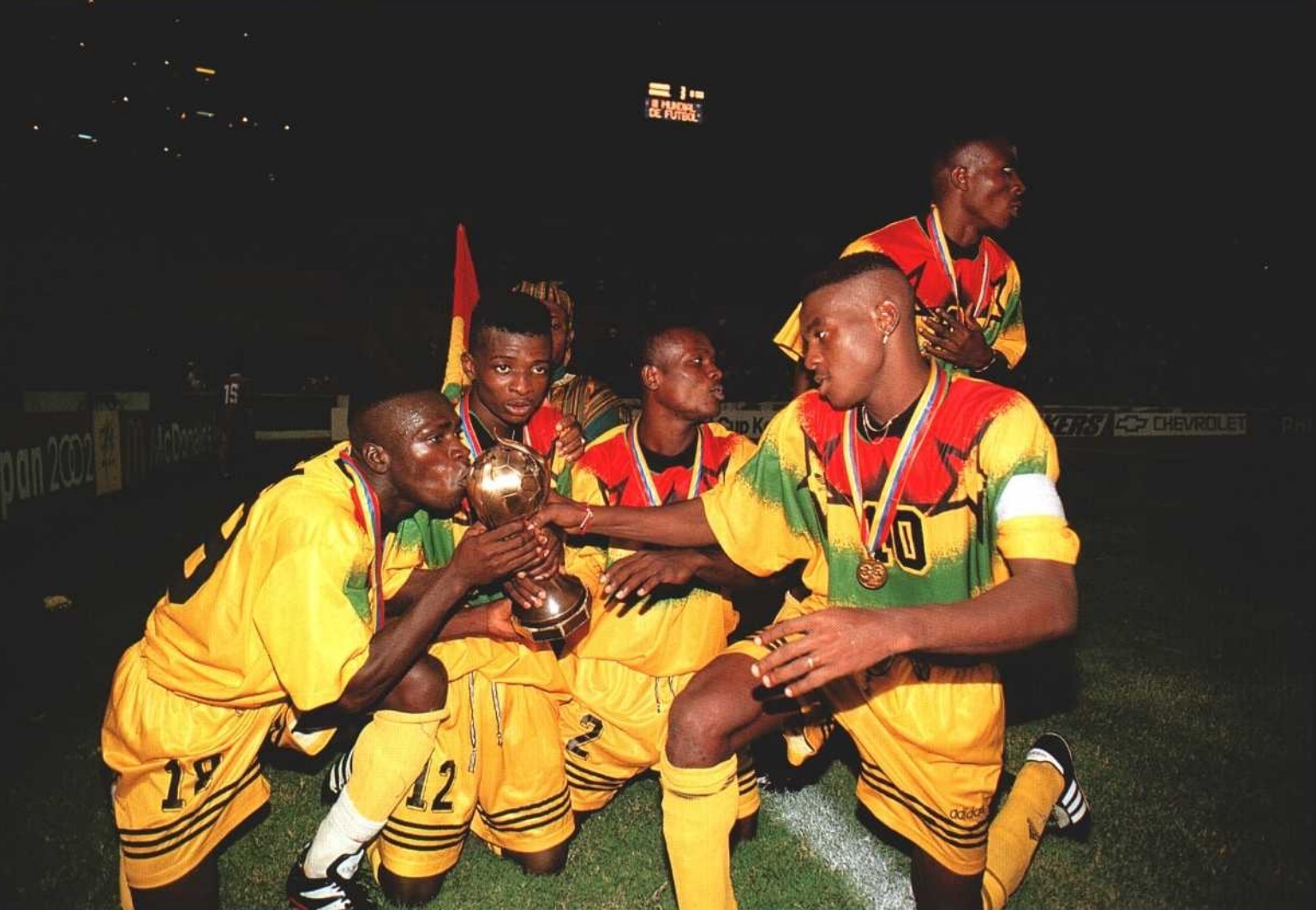
Ghana’s U-17 team, which won the 1999 African Championship

The Black Meteors squad that competed at the 2004 Summer Olympics in Athens featured emerging talents such as Asamoah Gyan, alongside players like Stephen Appiah, John Mensah, Sulley Muntari and captain Yussif Chibsah.
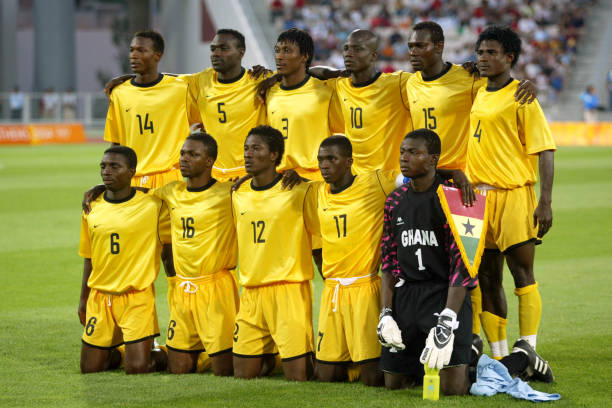
Ghana U-23 squad at Athens 2004. Photo by Adam Davy/EMPICS via Getty Images

Asamoah Gyan, who was still a teenager at the time, played a key role as Ghana exited in the group stage, but the experience proved crucial for his development.
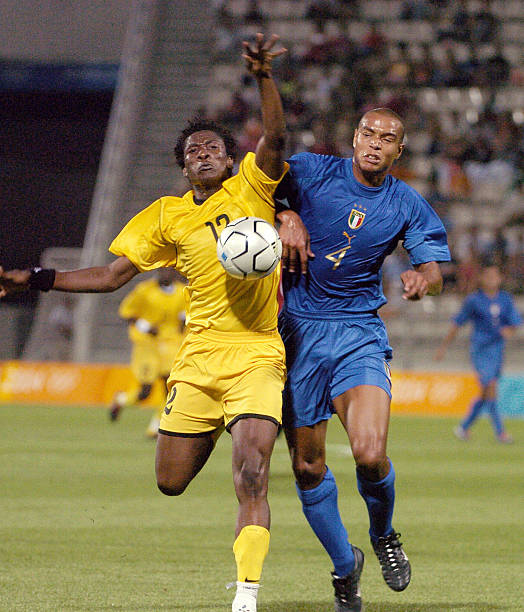
Asamoah Gyan of the Ghanaian team vies for the ball against Matteo Ferrari of the Italian team during their Olympic match at the Panthessaliko Stadium. Photo credit: KARALIS THEODOROS/AFP via Getty Images

That same group, combined with players like Michael Essien, would go on to form the backbone of Ghana’s most successful senior generation, qualifying for the 2006 FIFA World Cup and reaching the quarter-finals in 2010.
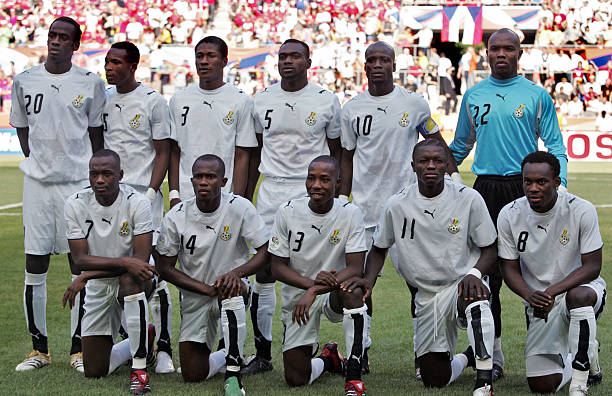
Ghanaian defender Illiasu Shilla, forward Matthew Amoah, defender Habib Mohamed, midfielder Sulley Muntari, midfielder Michael Essien, (top from L) midfielder Otto Addo, defender John Pantsil, forward Asamoah Gyan, defender John Mensah, midfielder Stephen Appiah, and goalkeeper Richard Kingston pose before the 2006 World Cup Group E football match Czech Republic vs. Ghana. Photo credit: PIUS OTOMI EKPEI/AFP via Getty Images

If the Athens 2004 squad laid the groundwork, the 2009 U-20 team perfected the model when the Black Satellites made history by becoming the first African country to win the FIFA U-20 World Cup after defeating Brazil on penalties. The squad, made up largely of locally developed players, demonstrated the strength of Ghana’s youth structure at the time.
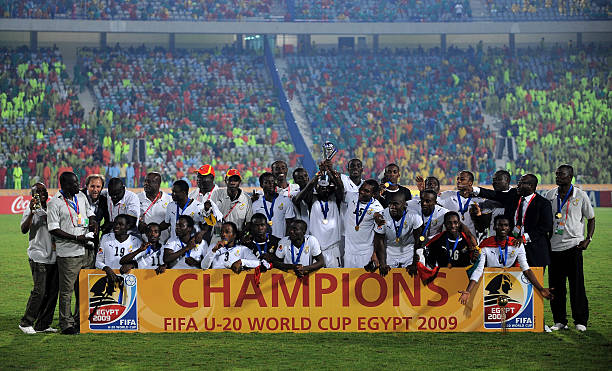
Ghana celebrate during the FIFA U20 World Final match between Ghana and Brazil at the Cairo International Stadium. Photo by Shaun Botterill – FIFA/FIFA via Getty Images

Several members of that team transitioned into the senior national setup and became key figures in the post-Essien era. Players such as André Ayew, Emmanuel Agyemang-Badu, Jonathan Mensah, Samuel Inkoom and Daniel Opare formed part of the next core of the Black Stars, helping Ghana remain competitive on the continental and global stage in the early 2010s.
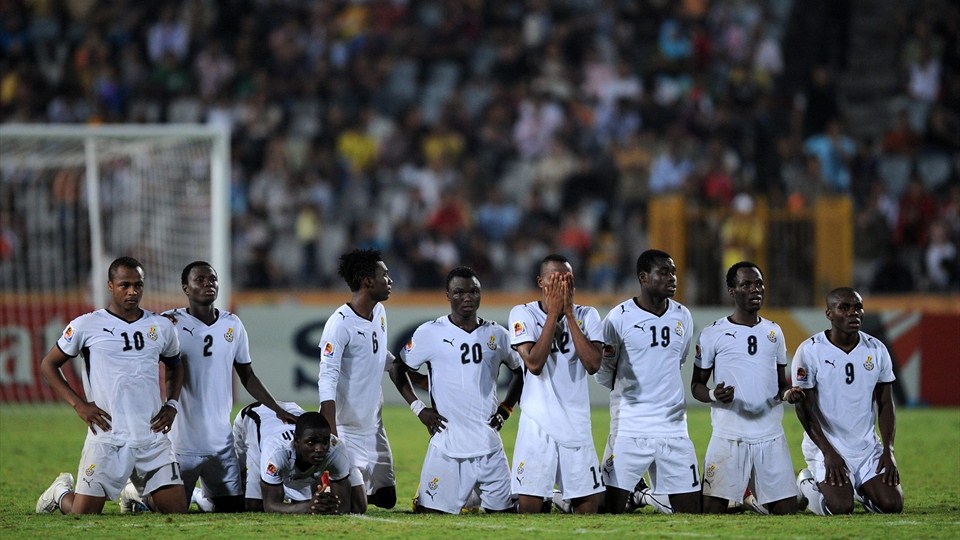
Photo credit: Getty Images

However, that production line has since closed. Former Black Stars midfielder Emmanuel Agyemang-Badu has attributed the senior team’s struggles to what he describes as the “collapse” of Ghana’s youth structures. According to him, the country’s traditional strength, its junior teams, is no longer functional.

Recent records support this concern. Since the Black Starlets’ last appearance at the FIFA U-17 World Cup in 2017, Ghana’s male youth teams have largely been absent from global competitions, a sharp contrast to earlier decades when the country consistently competed and excelled at the youth level.
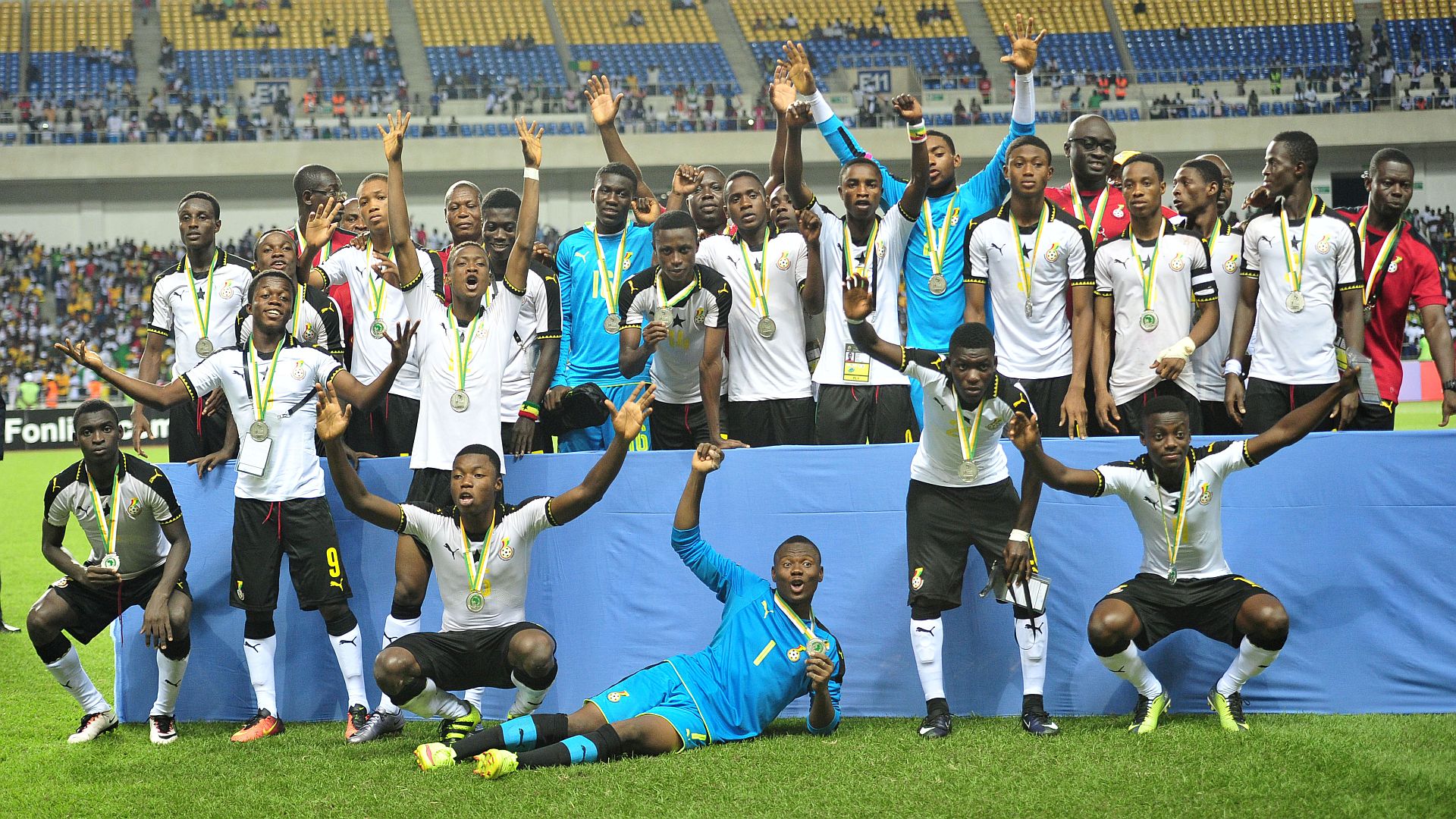
Ghana’s silver medal winner during the 2017 Under 17 Africa Cup of Nations Finals match between Ghana and Mali at the Libreville Stadium in Gabon. Photo credit: Samuel Shivambu/BackpagePix

At the U-17 level, the Black Starlets have not qualified for the FIFA U-17 World Cup since 2017, missing the 2019 and 2023 editions. They also failed to qualify for the U-17 AFCON in 2019, 2021, and 2023, marking a prolonged absence from the continental stage. However, the team ended the drought by qualifying for the 2026 edition.

For the U-20 side, the Black Satellites have missed four consecutive FIFA U-20 World Cups, 2017, 2019, 2023 and 2025, despite winning the 2021 U-20 AFCON.

At the U-23 level, the Black Meteors’ struggles are even more pronounced. Ghana has not qualified for the Olympic Games since 2004, missing out on 2008, 2012, 2016, 2020 and 2024.

The trend highlights a sustained drop in youth-level competitiveness since the late 2010s.

The implications are now visible at the senior level. The steady transition of players from youth teams into the Black Stars has slowed, leaving gaps that are increasingly filled by foreign-based players rather than a structured domestic pipeline.

This shift has become central to the ongoing discussion on player selection. On Channel One TV’s sports programme, World Cup Central, analysts have questioned whether Ghana should enforce a quota for locally based players in the national team. The argument in favour often points back to earlier eras, when locally nurtured talent formed the backbone of the Black Stars.

Compared with other successful football nations, they prioritise youth development as a foundation for their senior teams. Countries like Spain, Germany and Senegal invest heavily in structured academies and national youth systems, ensuring a steady progression of players into their senior squads rather than relying primarily on externally developed talent.
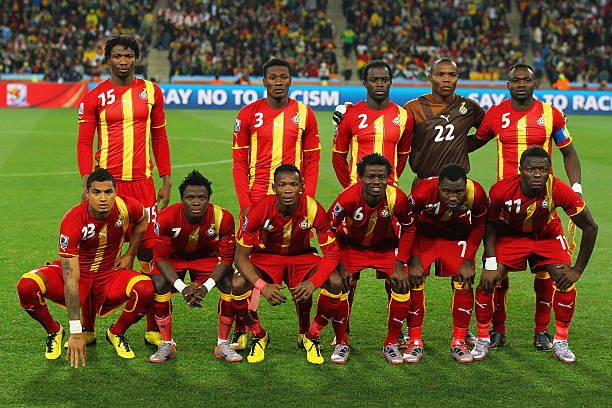
The Ghana team line up for a group photo before the 2010 FIFA World Cup South Africa Quarter Final match between Uruguay and Ghana at the Soccer City stadium on July 2, 2010, in Johannesburg, South Africa. Photo by Cameron Spencer/Getty Images

Ghana’s past suggests a similar approach once worked effectively. The transition from the 2001 U-20 generation, which produced Essien, Muntari and Appiah, to the 2009 cohort demonstrated continuity and planning. That continuity is now largely absent.
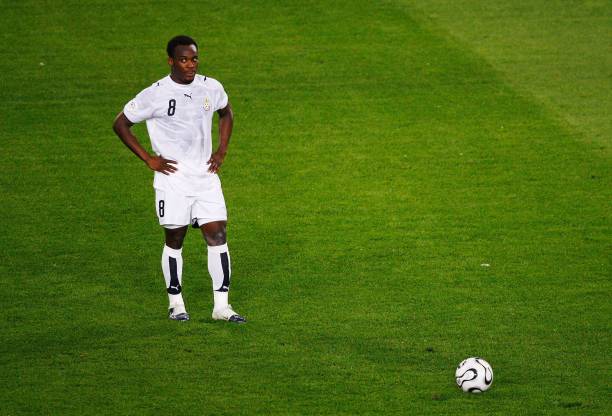
Michael Essien of Ghana looks dejected following his team’s defeat in the FIFA World Cup Germany 2006 Group E match between Italy and Ghana played at the Stadium Hanover on June 12, 2006, in Hanover, Germany. Photo by Shaun Botterill/Getty Images

As the Black Stars aim to rebuild and remain competitive ahead of future tournaments, not just the 2026 FIFA World Cup, the question is no longer just about quotas for local players. It is about whether authorities can restore the youth development structures that once made such debates unnecessary.

Previous Post

“I feel fully fulfilled playing under Luis Enrique” – PSG midfielder Vitinha

Next Post

Black Stars: Carlos Queiroz commences European player engagement

Related Posts

LIVERPOOL, ENGLAND - MAY 09: Cole Palmer of Chelsea scores a goal which was later ruled out following a VAR review during the Premier League match between Liverpool and Chelsea at Anfield on May 09, 2026 in Liverpool, England. (Photo by Carl Recine/Getty Images)
Football

Carabao Cup: Liverpool draw Chelsea in Carabao Cup fourth round

September 16, 2026
MANCHESTER, ENGLAND - SEPTEMBER 16: Jaouen Hadjam of Brighton and Hove Albion and Charalampos Kostoulas of Brighton and Hove Albion celebrate Brighton 1st goal during the Carabao Cup Third Round match between Manchester United and Brighton & Hove Albion at Old Trafford on September 16, 2026 in Manchester, England. (Photo by Nigel French/Sportsphoto/Allstar via Getty Images)
Football

Carabao Cup: Brighton stage stunning comeback to knock Manchester United out

September 16, 2026
Football

GFA President calls for free use of government astroturfs for Colts clubs

September 16, 2026
Yves Bissouma Photo Courtesy: Ajax Amsterdam
Football

“He knows what it takes to perform at highest level”- Ajax Director on Yves Bissouma

September 16, 2026
Cristiano Ronaldo of Al Nassr reacts (Photo by Mohammed Saad/Anadolu via Getty Images)
Football

Postecoglou takes responsibility as Ronaldo’s Al-Nassr is thrashed in Champions league

September 16, 2026
Max Dowman of Arsenal celebrates scoring his team’s first goal during the Carabao Cup Third Round match between Ipswich Town and Arsenal (Photo by David Price/Arsenal FC via Getty Images)
Football

“We need to look after Max Dowman”- Mikel Arteta after 16 year old impresses in Arsenal win

September 16, 2026
Yan Diomande of Real Madrid looks on during the LaLiga EA Sports 2026/27 match between Elche CF and Real Madrid (Photo by Mateo Villalba/Getty Images)
Football

“I’m happy Yan Diomande is improving”- Real Madrid head coach Jose Mourinho

September 16, 2026
Lionel Messi (Argentina) celebrates his second goal, making the score 2-0. (Photo by Tom Weller/picture alliance via Getty Images)
Football

“Messi included in Argentina squad for farewell he deserves”- Argentina FA Boss

September 16, 2026
Load More
Next Post
Carlos Queiro speaks to the media in a post match press conference after the FIFA Arab Cup 2025 Group B match between Oman and Comoros (Photo by Jan Kruger - FIFA/FIFA via Getty Images)

Black Stars: Carlos Queiroz commences European player engagement

Leave a Reply Cancel reply

Your email address will not be published. Required fields are marked *

RSS Citi Podcasts

Citi Sports Online

© 2024 Citi Sports Online

  • Home
  • News
  • Football
  • Ghana Premier League
  • Livescores
  • Sports Panorama
  • Videos
  • World Cup
  • AFCON

No Result
View All Result
  • Home
  • News
  • Football
    • Premier League
    • Local Football
  • Ghana Premier League
  • Livescores
  • Sports Panorama
  • Videos
  • World Cup
  • AFCON

© 2024 Citi Sports Online