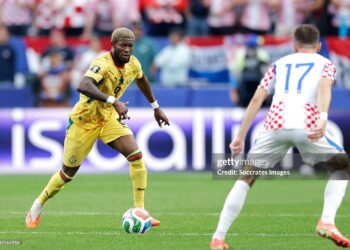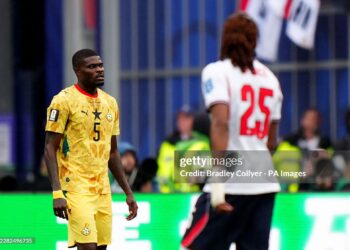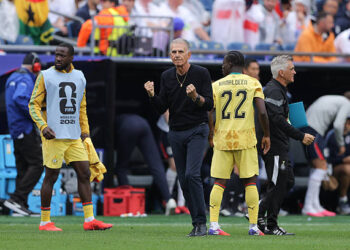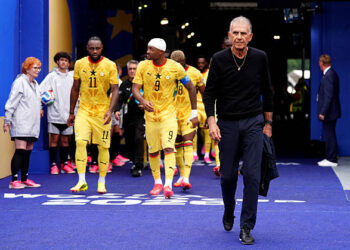


Ghana and Morocco went into the 2026 FIFA World Cup dealing with similar challenges after both countries sacked and replaced their national team head coaches mere weeks to the start of the world competition amid a chaotic start to the calendar year of 2026.
While Ghana failed to qualify to compete at the AFCON in a group that had Angola, Niger and Sudan, the Atlas Lions of Morocco dealt with their fair share of uncertainty despite making it to the AFCON Final in front of their home fans.
Losing in the final to Senegal on the field but winning the final on technicality grounds in the board room of Africa’s governing body, CAF, summed up the level of instability the team was dealing with.
In the midst of the uncertainty, there was a palpable hint that Morocco’s run with head coach Walid Regragui had run its course and it was time for change.
For proponents of the change, there was a belief that despite leading Morocco to Africa’s first semifinal berth at the World Cup, Regragui’s pragmatic style held back the deeply talented pool of Moroccan players.
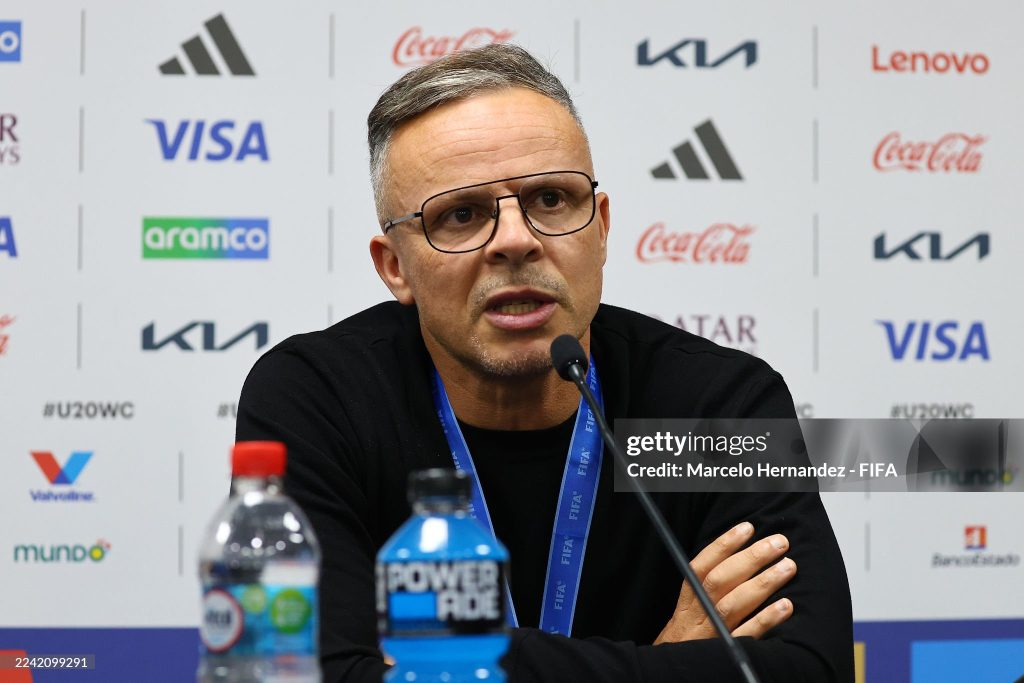
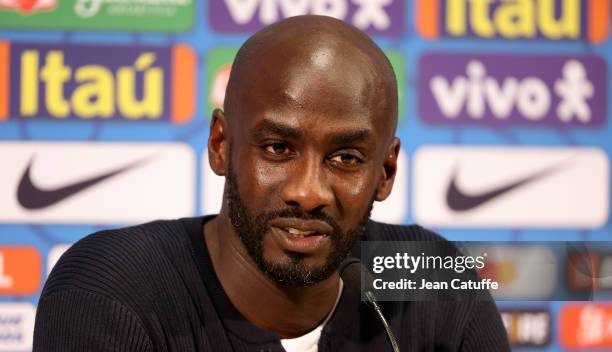
The timing on this push for change was impeccable as Mohamed Ouahbi had just led Morocco to become the second African nation to win the FIFA Under-20 World Cup while dominating the competition with brilliant free flowing attacking football.

Touching on the connection between Ghana and Morocco for this write up, Morocco’s world triumph at the Under-20 level in 2025 came 16 years after Ghana became the first African nation to clinch the trophy.
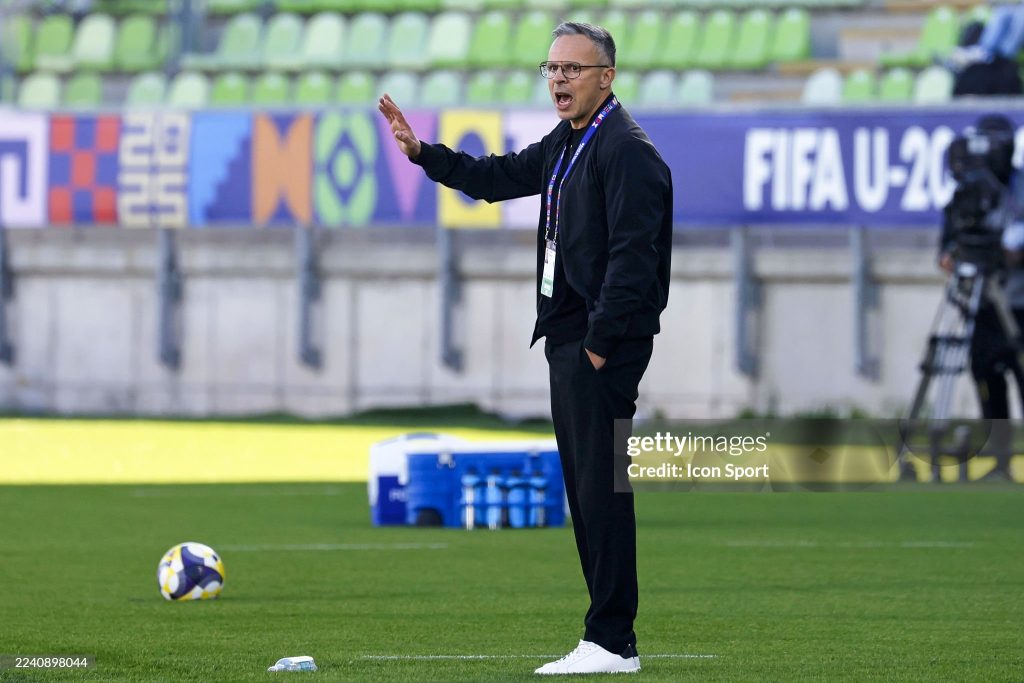
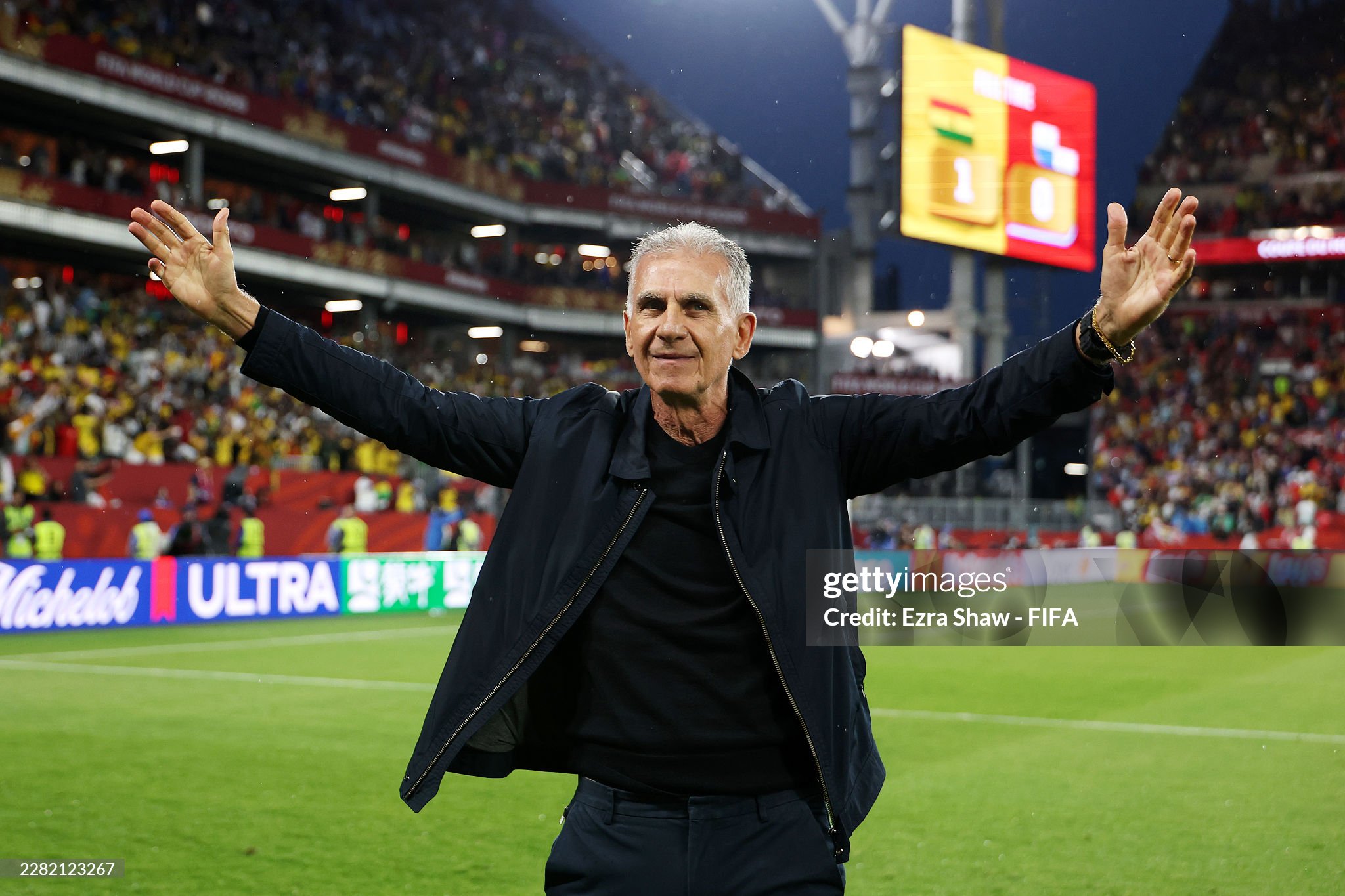
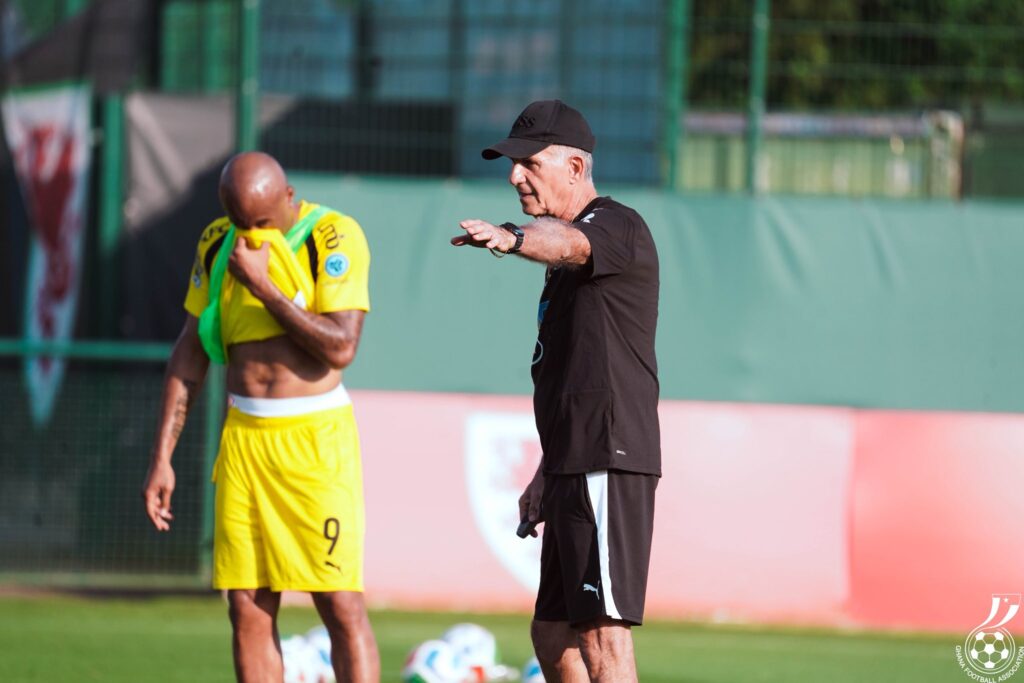
Back to the senior national team level and following the exit of Otto Addo and Walid Regragui as head coach of Ghana and Morocco respectively, Carlos Queiroz and Ouahbi were drafted in under different circumstances. Ouahbi had a month’s start on Queiroz regarding the time of his appointment and the Belgium born coach inherited a team that had cohesion with a brilliant structure defensively developed under Regragui.
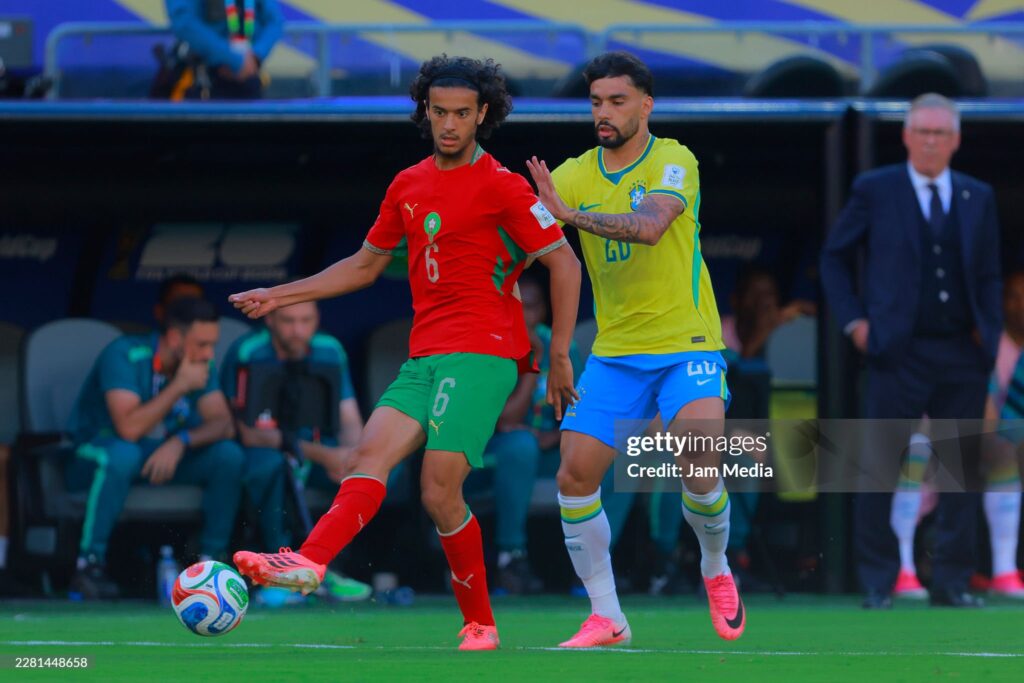
On the other hand, Queiroz inherited a squad bereft of confidence after losing four straight games under Otto Addo that was punctured by poor organization and a team in need of proper direction. So while Ouahbi’s Morocco march into the round of 16 at the 2026 FIFA World Cup to take on France, Carlos Queiroz has to deal with picking up the pieces of a broken Black Stars run that ultimately yielded progression to the round of 32 stage.
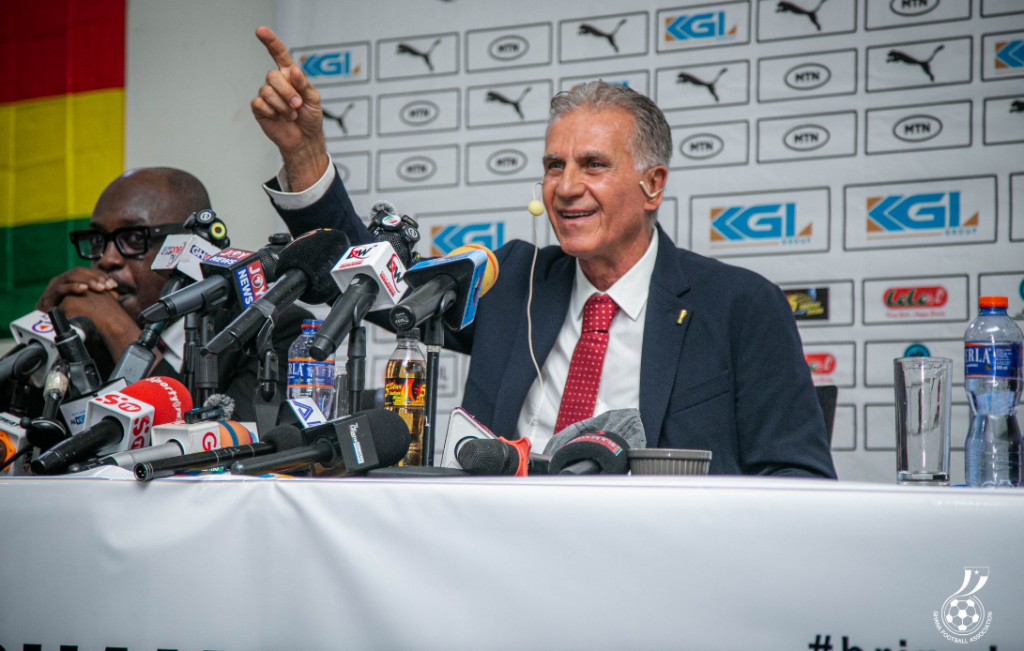
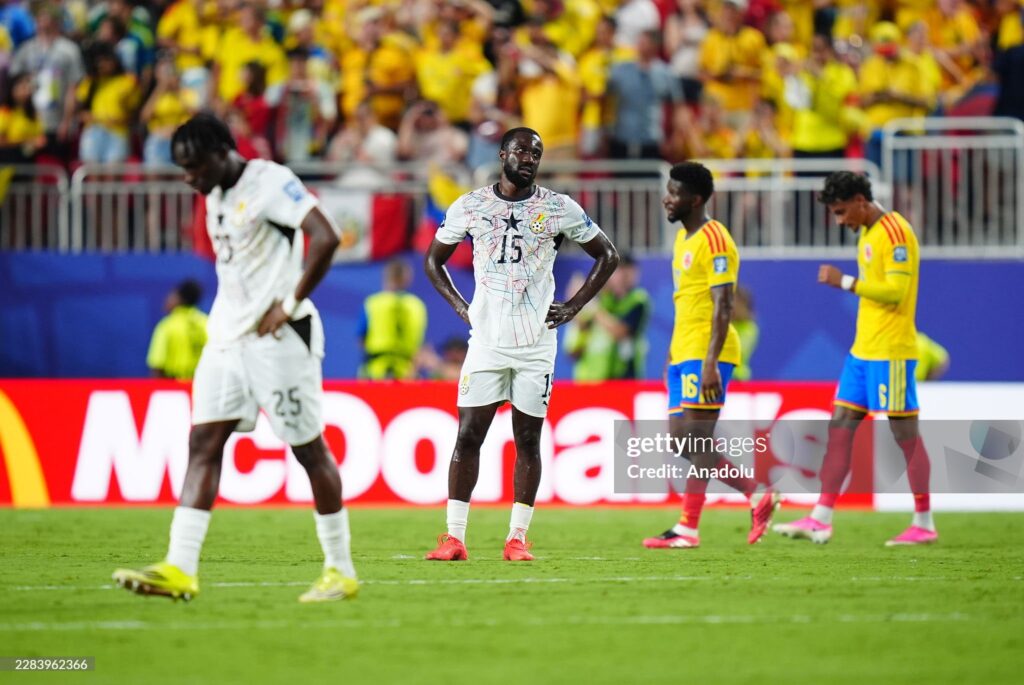
A day removed from the disappointing exit at the hands of Colombia, the blame game and vexatious rants have unsurprisingly dominated the Black Stars space but the appropriate questions that need to be asked ought to centre on the future of Carlos Queiroz and the future of Black Stars players who flamed out in the competition which has been elaborated by yours truly. (Click highlighted text to read article)
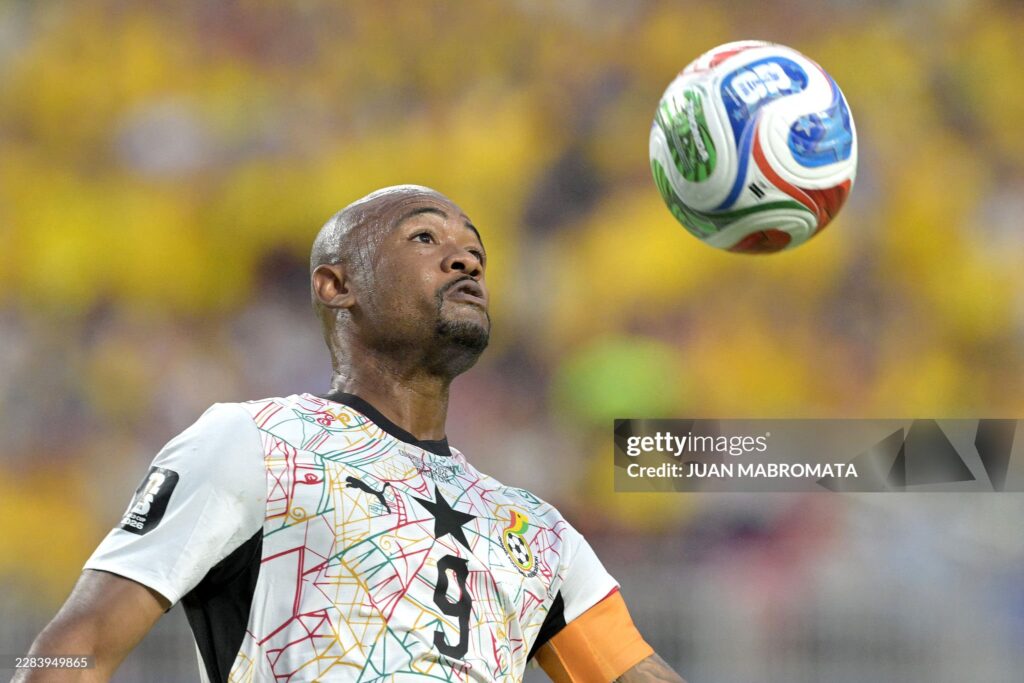
On the subject of Carlos Queiroz’s future, many have pointed to the limp performance against Colombia as enough good reason to avoid extending his deal beyond the four month probation contract handed to him before the World Cup. Conversely, it behooves on the Ghana Football Association (GFA) and the financier of the coach’s salary, the Government of Ghana via the Sports Ministry, to work out a deal that keeps Queiroz as Black Stars head coach for a while and here is why.
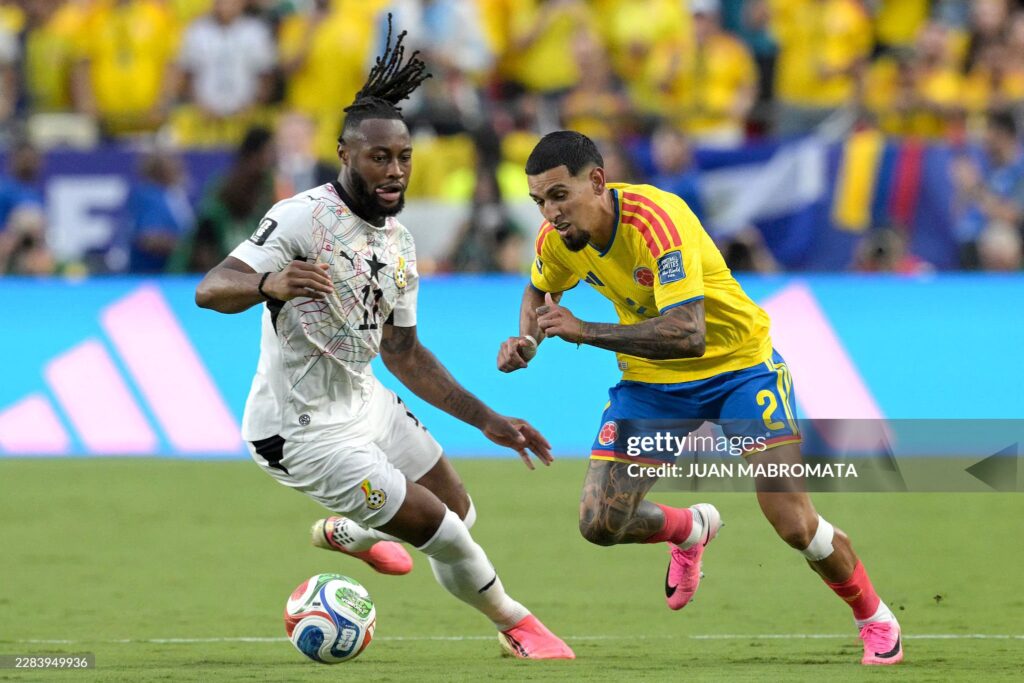
Body of Work
Prior to Queiroz’s appointment, Ghana had failed to progress beyond the group phase of the World Cup since the 2010 edition but in the space of a month, Queiroz got that problem sorted. Though the format of the World Cup has changed by making it easier to qualify from the group phase, Ghana’s point accumulation (four with no goal deficit) would have still been enough to see the Black Stars through even in previous World Cups.
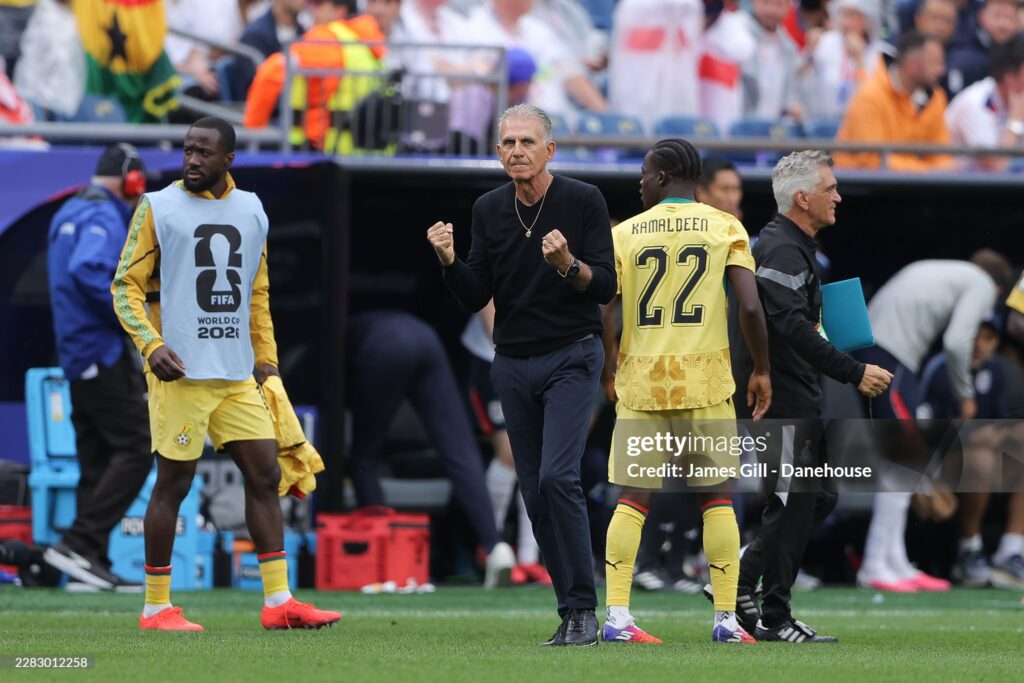
After all, Algeria and Paraguay qualified from the group stage in this year’s tourney with four points and a goal difference of -2 while Senegal qualified with three points, same as Cape Verde. Queiroz achieved qualification while excelling on the side of the ball he is associated with; defense. Through Ghana’s run in Mexico, Canada and the US, the Black Stars’ defensive play clearly stood out which perfectly embodied what the team’s head coach is all about.
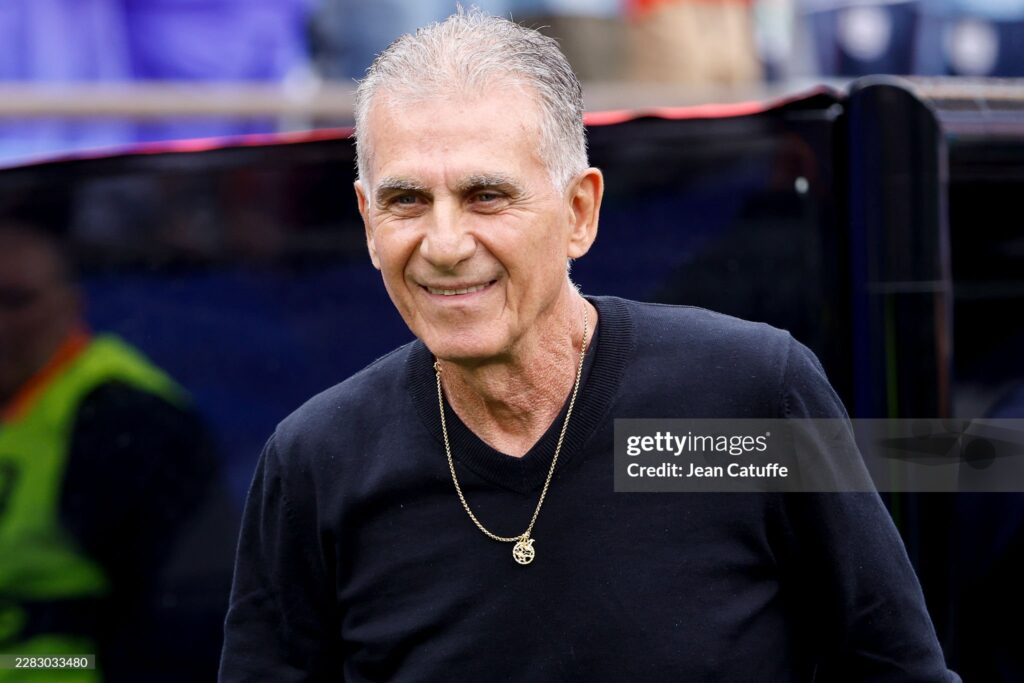
Player Improvement
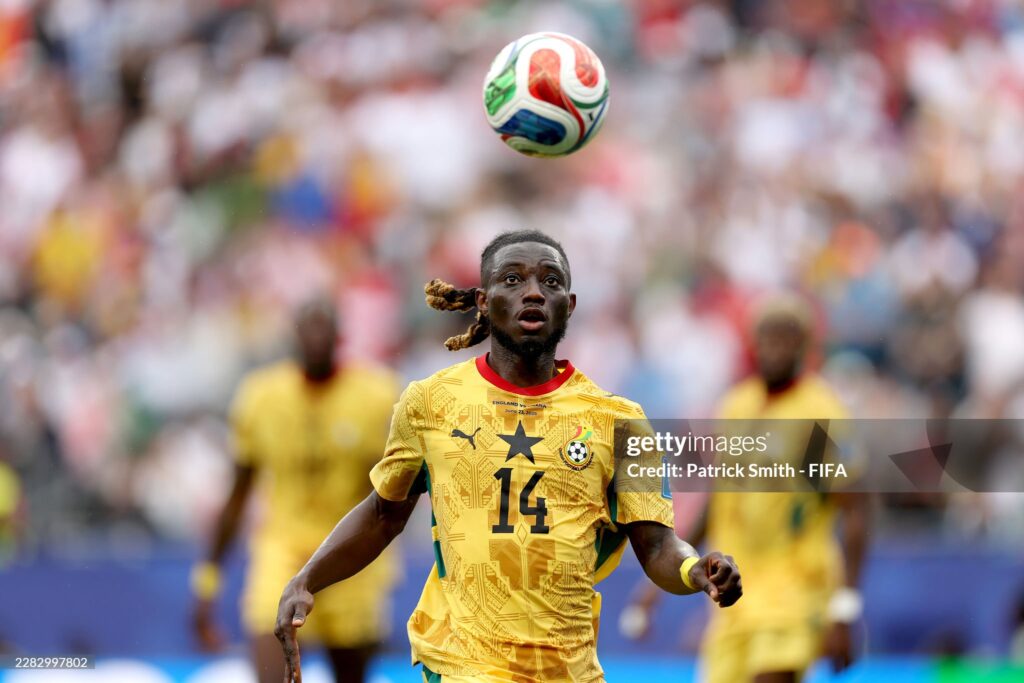
For Queiroz’s defensive plan to work, he needed his actors to deliver on the big stage and they did. His mainly used backline quartet of Marvin Senaya, Gideon Mensah, Jonas Adjetey and Jerome Opoku fills up the top four rankings of the best performers for the Black Stars.
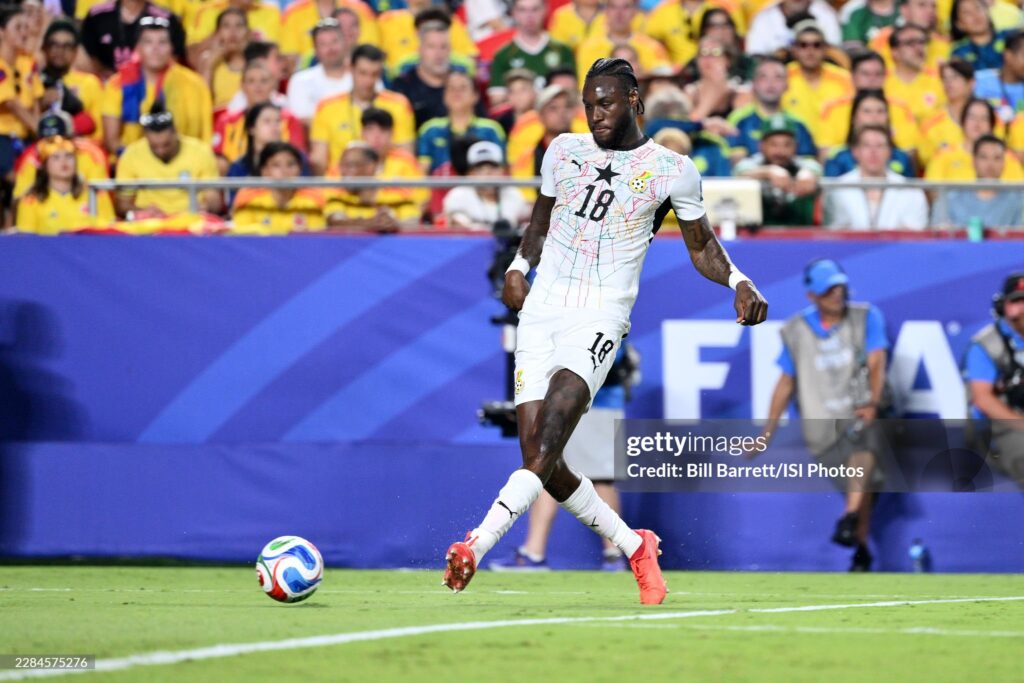
Prior to Queiroz’s appointment, none of the above-mentioned players would have come close to the top spots on any list of the best performers in the Black Stars but that has changed under the Portuguese manager. It is also important to stress that Senaya, Mensah, Opoku and Adjetey play in the department that Queiroz’s coaching strength is tied to- defense.
Game Plan and Proper Preparation
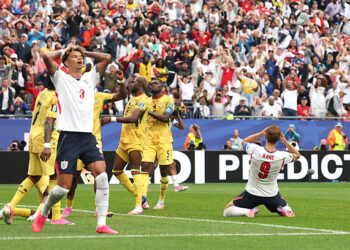
Unlike the time under Otto Addo where the Black Stars lined up against teams and you could tell the game plan was practically lost in a labyrinth of food analogies underpinned by fork and spoon sound bites, Ghana looked well prepared to execute a set game plan under Carlos Queiroz. The defense always led the way in organization, girth and set up to nullify any threat from opposing teams and this was very evident in Ghana’s goalless draw against England.
In five games under Queiroz, Ghana has scored three and two out of those three have come in transition including Caleb Yirenkyi’s goal in the win over Panama. In a post-game interview, Brandon Thomas-Asante, who provided the assist stated that the sweeping move that led to the goal had been rehearsed in training.
Timing
Thanks to the GFA, the timing of Carlos Queiroz’s appointment was very poor as the Kurt Okraku-led administration failed to sack Otto Addo long before March 31, 2026. The GFA should refrain from repeating that mistake by letting go of Carlos Queiroz, appointing an interim coach-very likely Kurt Okraku’s coaching diamond in Desmond Ofei-to oversee 2027 AFCON qualifiers that commence as early as September and then go full board on casting their proverbial net wide to bring in a new head coach.
Considering Ghana failed to qualify to the 2027 AFCON, toying around with another tricky qualifying phase that has Cote D’Ivoire and Gambia with Ghana in Group C, could leave the Black Stars missing out on qualifying to the AFCON for the second time on the bounce.
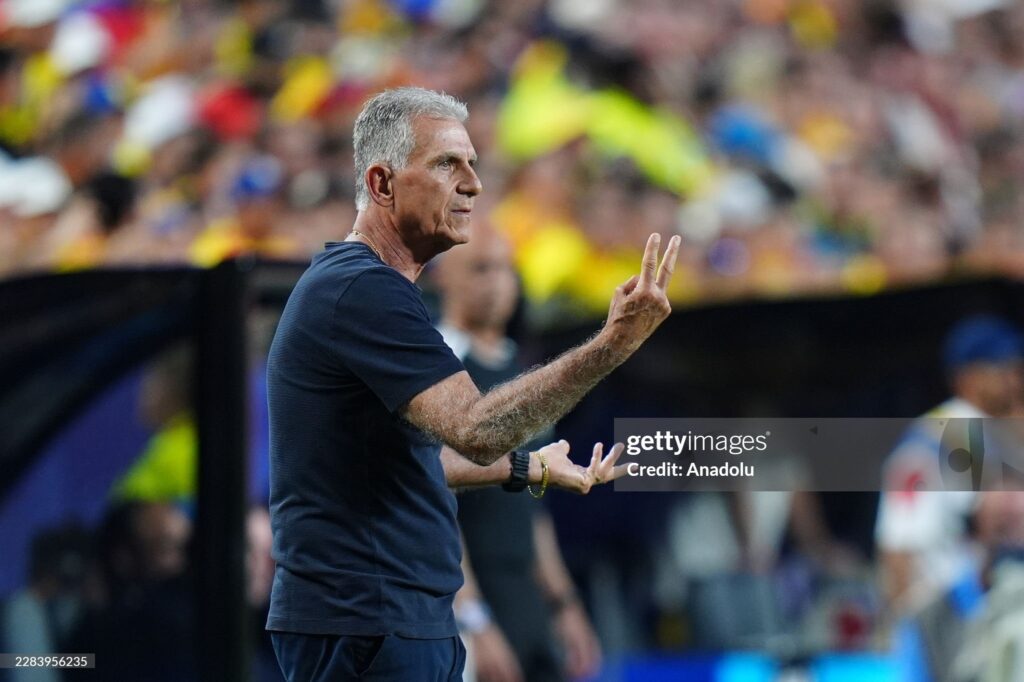
For a coach who generated improved performances from players featuring in the area he excels in while showing remarkable signs of proper planning and preparation over a very short period of time all the while delivering positive results, Carlos Queiroz ought to be kept on as Black Stars head coach.