

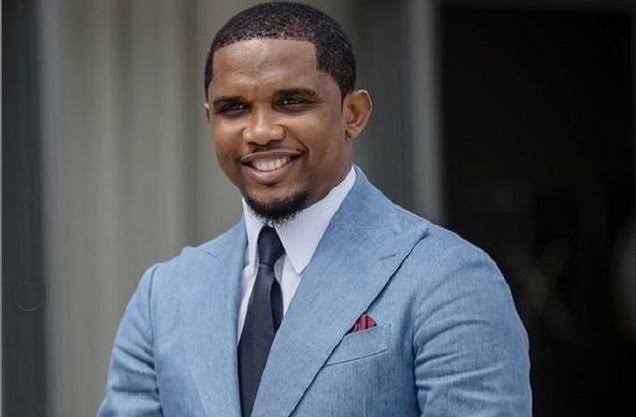
Cameroon Football Association president Samuel Eto’o is facing renewed scrutiny over a €567,570 payment made by Russia for an international friendly, with documents reportedly showing that the money was paid into his personal bank account in Qatar.
The payment was connected to Cameroon’s friendly against Russia in Moscow in October 2023.
According to documents reviewed by The Times, the Russian Football Union was instructed to make two payments of €455,056 and €112,514 into an account held by Eto’o with Qatar National Bank in Doha.
The arrangement has raised questions about the handling of federation funds under Eto’o, who has served as president of the Cameroon Football Association, FECAFOOT, since 2021.
Former FECAFOOT executives have reportedly complained to FIFA’s ethics committee, saying they have been unable to establish what happened to the money after it was paid into Eto’o’s personal account.
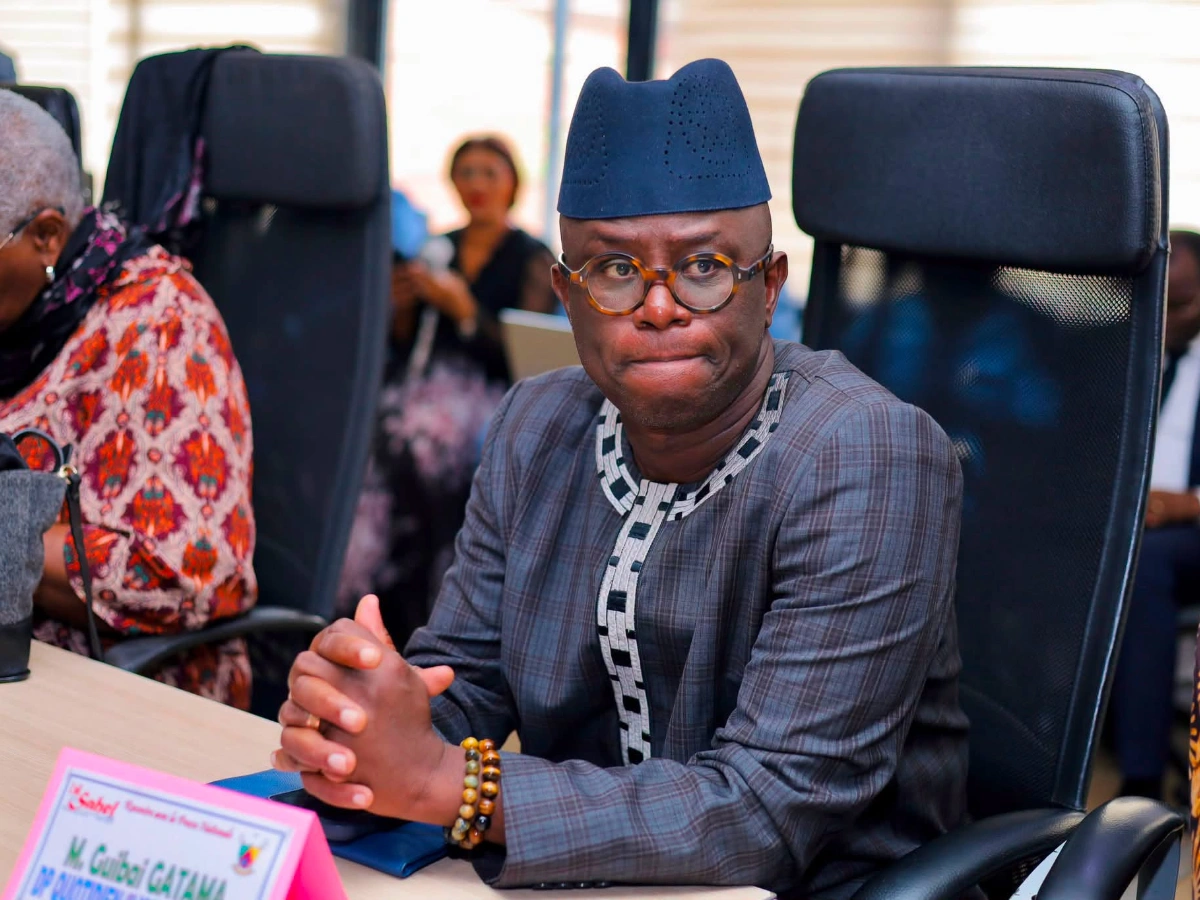
Guibai Gatama, a former member of the FECAFOOT executive committee, said there was no accounting or banking evidence available to show that the funds were subsequently transferred to an official federation account or properly recorded in the federation’s financial records.
The documents reportedly include the contract for the Russia-Cameroon friendly and correspondence from FECAFOOT officials requesting that the Russian Football Union make the payment into Eto’o’s private account.
A letter dated 2 October 2023 and signed by then FECAFOOT national-team coordinator Benoît Angbwa reportedly requested €455,056, representing 80% of the participation fee, be paid into Eto’o’s Qatar account.
The key issue is whether there was a legitimate reason for using Eto’o’s personal account and, if so, whether the full amount was subsequently transferred to FECAFOOT and properly accounted for.
Reports from Cameroon have previously cited sanctions affecting Russian financial transactions as a possible explanation for the arrangement.
One explanation was that FECAFOOT did not have a suitable foreign-currency account outside Cameroon and that routing the payment through Qatar helped overcome difficulties with international transactions involving Russia.
Former federation officials have nevertheless questioned that explanation and called for the transaction to be fully accounted for.
The allegations do not, by themselves, establish that Eto’o misappropriated the money.
Neither Eto’o nor FECAFOOT had responded to The Times‘ request for comment at the time of its report. There have also been reports in Cameroon suggesting the funds were eventually transferred to FECAFOOT and accounted for.
The latest claims therefore centre on the destination and accounting of the €567,570 payment rather than an established finding of theft or embezzlement.
The controversy comes as Eto’o’s relationship with FIFA president Gianni Infantino also faces scrutiny.
Eto’o was recently cited in a FIFA legal filing in the United States concerning the controversial FIFA Forward Enterprise proposal, which sought private investment in commercial interests linked to the World Cup.
The proposal was ultimately abandoned following opposition from UEFA and other football bodies.
FIFA’s legal response to UEFA’s efforts to obtain documents in US courts cited support for the initiative from several football figures, including Eto’o.
UEFA has accused Infantino and those around him of attempting to commercialise FIFA’s most valuable assets, allegations FIFA has rejected.

Former FECAFOOT officials have questioned whether Eto’o’s relationship with FIFA’s leadership could have influenced the handling of previous complaints to FIFA’s ethics committee.
FIFA, however, maintains that its ethics and disciplinary bodies operate independently.
Eto’o has also previously faced disciplinary action from CAF and FIFA.
In July 2024, CAF’s disciplinary board fined him $200,000 after finding that he had seriously breached its principles of ethics, integrity and sportsmanship over a paid brand ambassador agreement with a betting company. The panel, however, found insufficient evidence to establish alleged match manipulation.
FIFA later banned Eto’o from attending Cameroon representative-team matches for six months after finding him guilty of offensive behaviour and misconduct during a Women’s Under-20 World Cup match.
CAF also imposed a four-match stadium ban and a $20,000 fine on Eto’o following misconduct during Cameroon’s 2025 Africa Cup of Nations quarter-final against Morocco.