

A World Cup is not won in the six weeks it takes to play one. It is won, or lost, in the decade before it begins.
National coaches get only a handful of sessions with players who spend most of the year under different managers, in different systems.
By the time a squad gathers for a major tournament, the foundations are already laid or already missing. Tactics can improve a team. They cannot create talent. That work happens years earlier, through a clear, consistent development pathway.
Few countries show this better than Ghana.
Two sides of the same story for Ghana
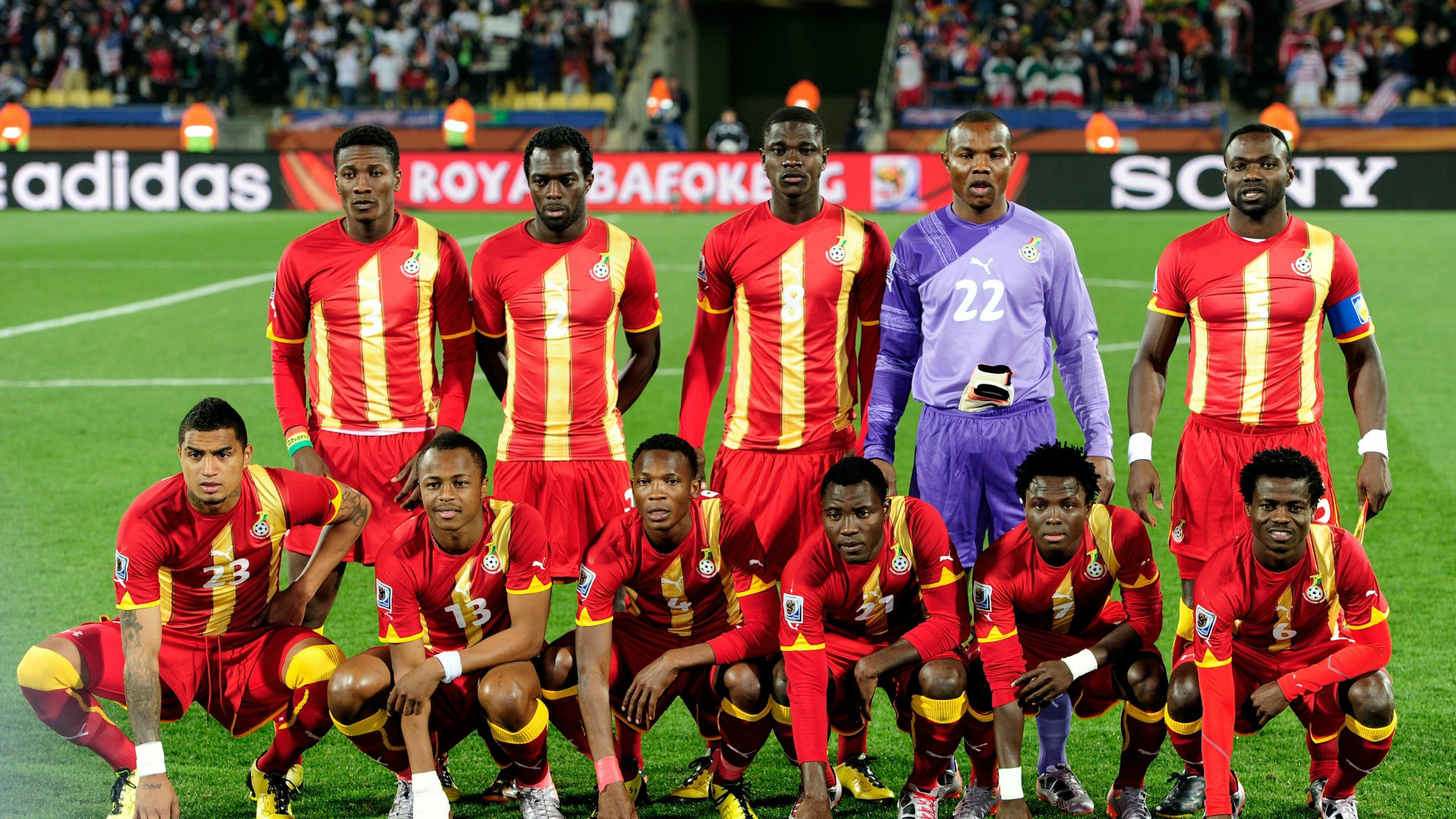
Between 2008 and 2017, the Black Stars lived the good version. Six straight AFCON semi-finals, final defeats in 2010 and 2015, and a penalty kick away from becoming the first African nation in a World Cup semi-final.
That run wasn’t luck ; it was built on academies like Right to Dream, WAFA and Feyenoord Academy Ghana, which fed the senior team players like Mohammed Kudus, Kamaldeen Sulemana, Caleb Yirenkyi and Ernest Nuamah.
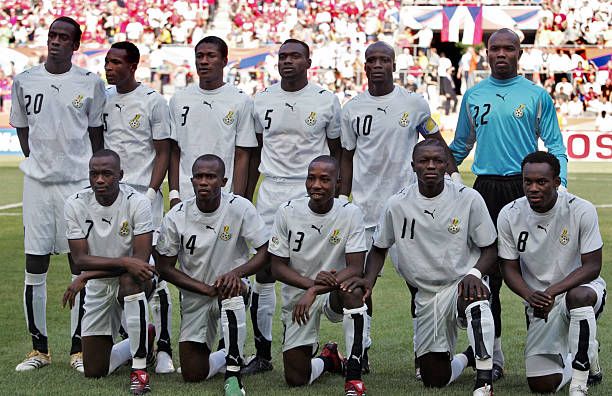
Then the pipeline slowed, and the results said so: Round of 16 at AFCON 2019, group-stage exits in 2021 and 2023, and in 2025, the unthinkable ; Ghana, four-time African champions, failed to qualify for AFCON at all for the first time since 2004, finishing bottom of a group behind Angola, Sudan and Niger without a single win.
Ghana has since rebounded to qualify for the 2026 World Cup under Carlos Queiroz, but the real question isn’t why Ghana lost six matches. It’s why a country with this pedigree got to a point where it could lose them.
Individual brilliance is not a strategy
Post-mortems on the AFCON failure kept landing on the same point: talented individuals, no shared identity.
Real Oviedo’s Kwasi Sibo contrasted the disjointed AFCON campaign with a far more cohesive World Cup qualifying run too much reliance on moments, not enough structure. Ghana even changed captains mid-campaign, from Partey to Kudus to Ayew, a small sign of a team still searching for itself.
This is the cost of leaning on a golden generation instead of a system: individual quality can hide the cracks for a while, but no generation lasts.
When Ghana’s flow of elite players slowed, no equally strong pipeline was ready behind it. Queiroz can organise, discipline and improve Ghana’s shape but even he can’t manufacture the next Kudus or Semenyo in a training camp. Those players take years to build, and someone else already built them.
Talent isn’t the problem in Ghana , the system around it is
Ghana isn’t short of ability. Right to Dream has produced players for two decades; the country has Colts football and age-group teams that have delivered before.
What’s missing is the connective tissue: a national technical framework with shared standards, rather than dependence on a handful of private academies.
Regional grants and youth tournaments are useful, but they’re building blocks, not a plan they don’t guarantee nationwide scouting, consistent coaching, or a clear pathway from grassroots to the senior team. And years of governance disputes at the GFA have made it hard for any long-term vision to survive past one leadership cycle.
What a real plan looks like
Five priorities, above coaching appointments:
one football philosophy : through every age group so players aren’t relearning the game each promotion; higher, nationally regulated academy standards so quality isn’t confined to Right to Dream and WAFA; serious investment in Ghanaian coach education, reducing reliance on short-term foreign hires; governance stable enough to survive a change of GFA president or head coach; and grassroots investment treated as the foundation, not the afterthought ; facilities, competition volume, sports science, not just footballs and jerseys.
Proof it works: Germany, Belgium, Argentina
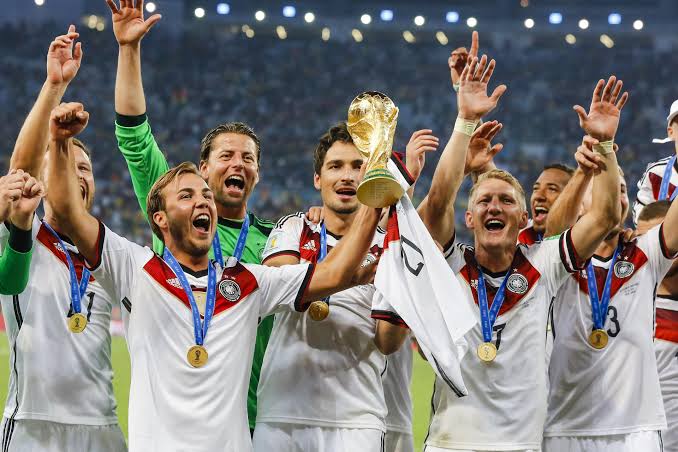
Germany rebuilt after bombing out of Euro 2000: mandatory certified academies at every pro club, expanded regional talent centres, higher coaching standards nationwide. Fourteen years later, most of the 2014 World Cup-winning squad came straight out of that system. It didn’t find a golden generation ; it built one.
Belgium, a country of 11 million that could never out-produce the giants, decided to out-plan them instead. After Euro 2000, it built one shared technical philosophy across every academy.
It took over a decade to pay off then De Bruyne, Hazard, Lukaku and Courtois arrived together and took Belgium to a 2018 World Cup semi-final. The golden generation wasn’t the plan; it was the plan’s result.
Argentina is the sharpest lesson of all, because it never lacked talent only a system to convert it.
After 2018, the AFA backed Lionel Scaloni, kept his staff intact, and let him blend Messi with emerging players like Enzo Fernández and Julián Álvarez over years rather than reinventing the squad every camp.
The payoff: a first Copa América in 28 years (2021), the 2022 World Cup, another Copa América (2024), and a second straight World Cup final in 2026. If the most talent-rich footballing nation on earth still needed a plan, talent alone was never going to be enough for anyone else either.

The 2026 World Cup made the point again
Under Queiroz, Ghana was organised and hard to beat: a win over Panama, a draw with England, a narrow loss to Croatia, then a Round of 32 finish. Against Colombia, Ghana dominated possession but couldn’t turn it into chances, losing 1-0.
That wasn’t a coaching failure ; it was proof that creativity and attacking depth can’t be built in a training camp. They’re built over years, through a system.
World Cups aren’t won when the tournament starts. They’re won in the decade before it. What happens to the Black Stars in 2030 will depend far less on who’s in the dugout than on what Ghana decides to build now.
If Ghana wants another Kudus or Semenyo, it can’t just hope one shows up. It has to build the system that produces them, again and again.