

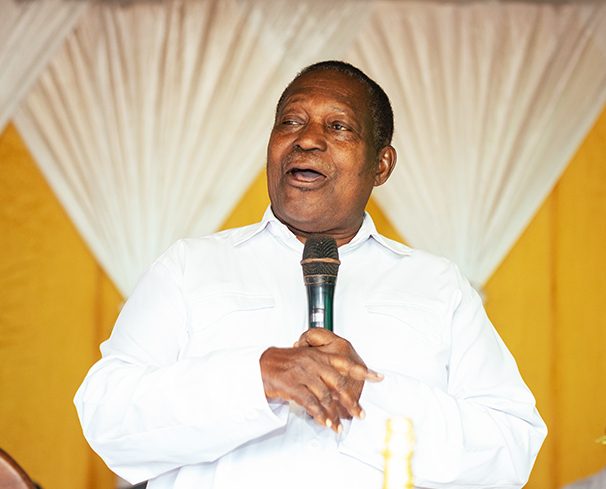
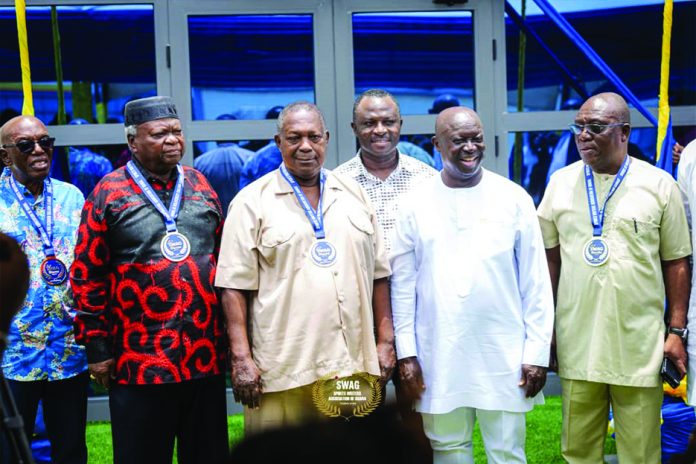
I dedicate my column this week to the memory of my bosom departed colleague Kobina Ebo Quansah, former President of the Sportswriters Association of Ghana (SWAG) whose one week observance will be held in Accra this weekend.
I reproduce the first article he wrote in 1976 for the maiden edition of the SWAG’s projected annual magazine, “FOOTBALL GUIDE”, which was unfortunately short-lived.
Ebo’s review of the 1975 season was titled “AN UP AND DOWN YEAR IN ALL ASPECTS”
It was sweet-sour, that is the apt description of Ghana football in 1975, the year that saw the nation coming close to recapturing the past glory in the crazy game of soccer but saw all the efforts negated at the finishing post and had to console herself with an unprocessed passport to Montreal Canada.
All said and done international soccer gave the average Ghanaian something to be enthused about as the Black Stars recorded some smashing victories reminiscent of the early 1960s when they paraded the soccer arenas of Africa as the Lords of continental soccer.
This glory was later to be given a jolt when the Moroccan national team pipped Ghana in a photo finish contest to decide which of the two national sides represented their country in the 9th Africa Cup of Nations finals in Ethiopia in February this year.
The national squad set off the road to her revival with a 6-0 thumping of the Lone Stars of Liberia in the first leg of the Olympic Games qualifying series at Accra Stadium on April 6 and won the second leg 4-1 in Monrovia1. That was on April 20.
The next assignment in connection with the African Cup of Nations preliminaries saw Mali, aided by the biased refereeing of Senegalese Ndiaye to defeat Ghana 3-1 in Bamako to set in motion many protest notes. The first was from the Ghana Football Association who cabled the AFC Headquarters in Cairo protesting against two professional players Mali flew in from France to reinforce their team. This was followed by the Sports Writers Association of Ghana who requested the AFC to expedite action on Ghana’s protest.
Ghana won the protest but this was cunningly communicated to the nation after the Black Stars had sent Mali packing home with a neat 4-0 whipping in the second leg duel in Accra. Midway in the year, the handling of the Black Stars changed hands with German Coach Karl Weigang handing over the baton of office to Oswaldo Sampao Jnr who arrived in the country from Brazil on a two-year coaching contract.
His maiden assignment was against Morocco who frustrated the forward march of the otherwise confident Black Stars with a 5-4 defeat on penalties. This was after Ghana had beaten the Simatic Arabs 2-0 at the Kumasi Stadium on Sunday June 29. The Arabs evened the score with a similar 2-0 victory in Casablanca on Sunday July 13 to invoke the five-penalty rule.
Then came the nations blackest day in soccer on Sunday August 24 when for the first time in the history of Ghana soccer Nigeria forced a 2-1 victory over Ghana in the second bilateral Games in Accra. This was however relegated to the background following the Black Stars clipping of the wings of the ambitious Green Eagles with a neat 3-0 smashing a week later.
This was followed by a brilliant 6-3 victory over Guinea to qualify to meet Senegal in the final preliminary Olympic Games two leg matches with the winner qualifying for the 1976 Olympics in Montreal Canada.
Club international assignment left a scar with the then champion club Accra Great Olympics doomed by administrative blunders on the part of the GFA.
They lost on 1-4 aggregate to Enugu Rangers of Nigeria.
On the local scene, Fabulous Asante Kotoko translated their pre-season view of making 1975 a happy one for themselves and all those who follow the destiny of the club by lifting their 7th league cup in their colourful career. They were followed as runners up by Sekondi Eleven Wise who turned on a fantastic attacking birth backed by a superb defensive system only to be frustrated in the closing stages of the season.
The programme was interrupted three times first to allow the Black Stars to prepare for their Olympic and African Cup matches against Liberia and Mali then to enable the same squad get set for Morocco and finally to give sufficient time for the general preparation for Nigeria in the second bilateral Games.
Happily for the nation, the controversial 1976 Double League introduced by the GFA was abolished on the directives of the Head of State who is also Commissioner for Sports, and with the abolition came the relegation of the four bottom clubs, Susu Biribi, Volta United, Oboutabri, and Gbewa United and the promotion of the Dumas Boys of Ghana Textile Printing and Standfast of Tema Food Complex.
Accra Great Olympics shaded off part of the gloom that hung on the club following their abortive African Cup campaign with the lifting of the FA Cup. The GFA however failed to honour the promise of entering the winners for the second African Cup winner’s tournament on the strength that the contest was not budgeted for.
But whatever be the case, 1976 looks like being a bumper harvest for Ghana soccer.
One only hopes and prays that the GFA, our referees, the various league clubs and the general public will contribute their quota to make the year even more memorable in terms of football achievement.
End of story.
Cheers everybody and keep loving sports.
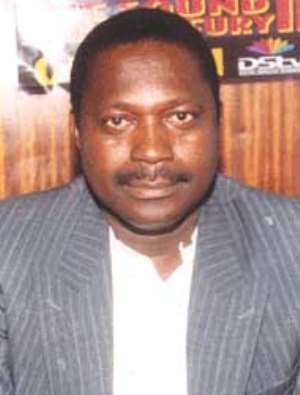
Ebo Quansah in 1976
1976 FOOTBALL GUIDE published by SWAG.