


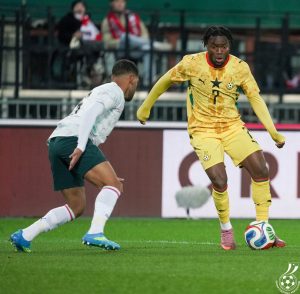
Ghana’s heavy 5–1 defeat to Austria in the international friendly has deepened concerns about the direction of the Black Stars under head coach, Otto Addo, with the performance exposing long-standing structural and tactical weaknesses rather than silencing critics.
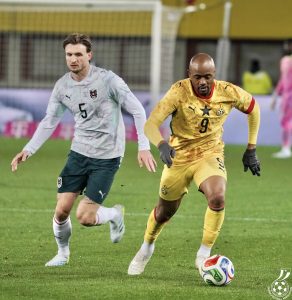
From the numbers, the gap was clear. Austria dominated possession with 60% to Ghana’s 40%, underlining their control of the game. They created far more clear-cut chances. Austria also registered 11 total shots, with 7 on target, compared to Ghana’s 5 shots and just 1 on target. In midfield, Austria completed significantly more passes, over 469 compared to Ghana’s 319, reflecting their ability to dictate tempo and sustain pressure.
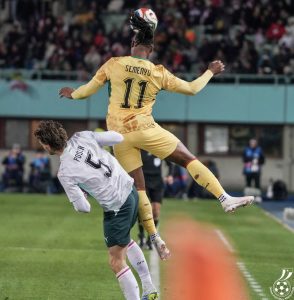
Ghana struggled to retain the ball, lost key midfield duels, and looked vulnerable whenever Austria transitioned quickly. The defensive unit was repeatedly stretched, with poor positioning and slow recovery allowing Austria to punish them.
This fixture was supposed to be a response to growing criticism, a chance to show progress and cohesion. Instead, it reinforced the concerns.
Ghana entered the game needing to prove tactical discipline and resilience. What unfolded was the opposite. The team lacked structure, particularly in midfield, where Austria dictated play with ease. Attacking transitions were disjointed, and there was little evidence of a clear system.
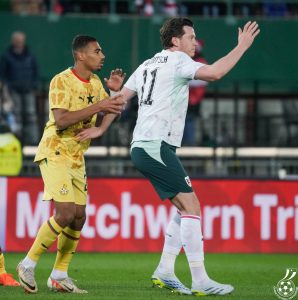
Despite expectations, the newly appointed additions to the technical team did not bring any visible improvement. There was no clear shift in approach, no enhanced structure, and no sign of better game management.
Defensively, the problems were even more glaring. The backline was exposed too often, and communication appeared lacking, leading to avoidable goals.
If Austria could score five with such ease, then Ghana’s next test against Germany on Monday, March 30, 2026, raises even bigger concerns. On current form, the encounter risks becoming a straightforward exercise for the German machine, given their efficiency, discipline, and ability to exploit exactly the kind of weaknesses Ghana displayed.
For critics of Otto Addo, this performance confirms long-held concerns, the absence of a clear identity, inconsistent selections, and a lack of tactical authority. Ghana looked reactive throughout, chasing the game rather than controlling it.
The team’s response after conceding also raises questions about mental strength. At this level, conceding one goal should not trigger a collapse, yet Ghana struggled to regain composure.
The scrutiny on Otto Addo goes beyond this defeat. He remains the coach who led Ghana during its failure to qualify for the Africa Cup of Nations (AFCON), a major disappointment given the Black Stars’ pedigree.
That context makes his continued leadership into the 2026 FIFA World Cup increasingly difficult to justify for many observers. A coach unable to secure continental qualification is now expected to compete at the highest global level.
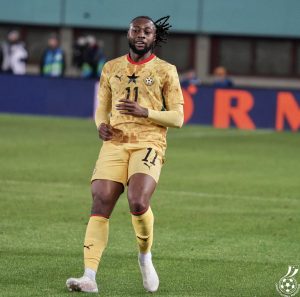
Tactically, the team still lacks a defined approach. Selection inconsistencies have prevented stability, and against Austria, those issues were fully exposed.
This defeat is more than a poor result, it is a signal. With a crucial fixture against Germany looming and the World Cup on the horizon, Ghana faces urgent questions about leadership, preparation, and direction.
Unless there is a rapid and significant turnaround, this performance will be remembered not as an isolated setback but as confirmation of deeper problems within the team.